Húsavík
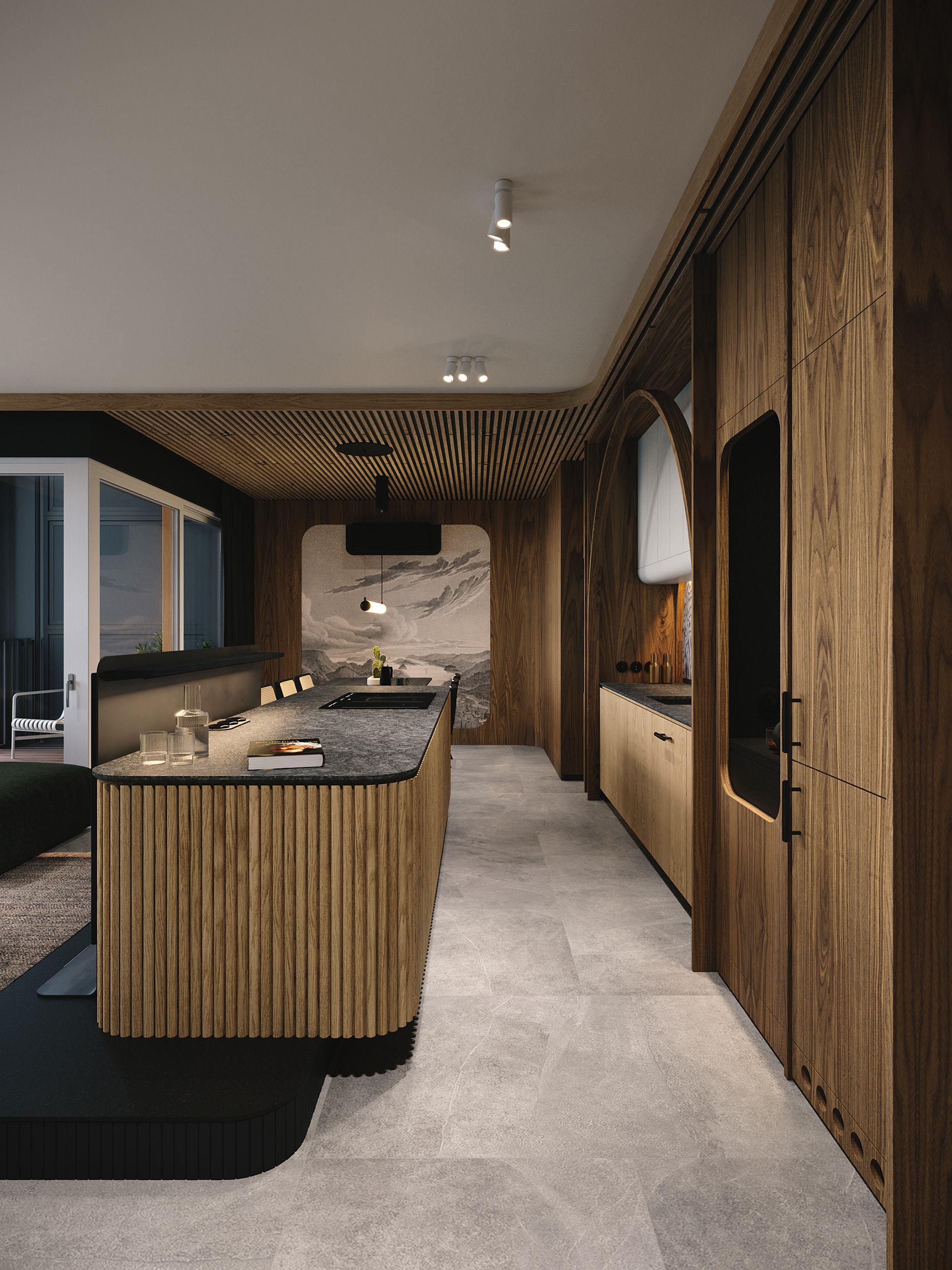
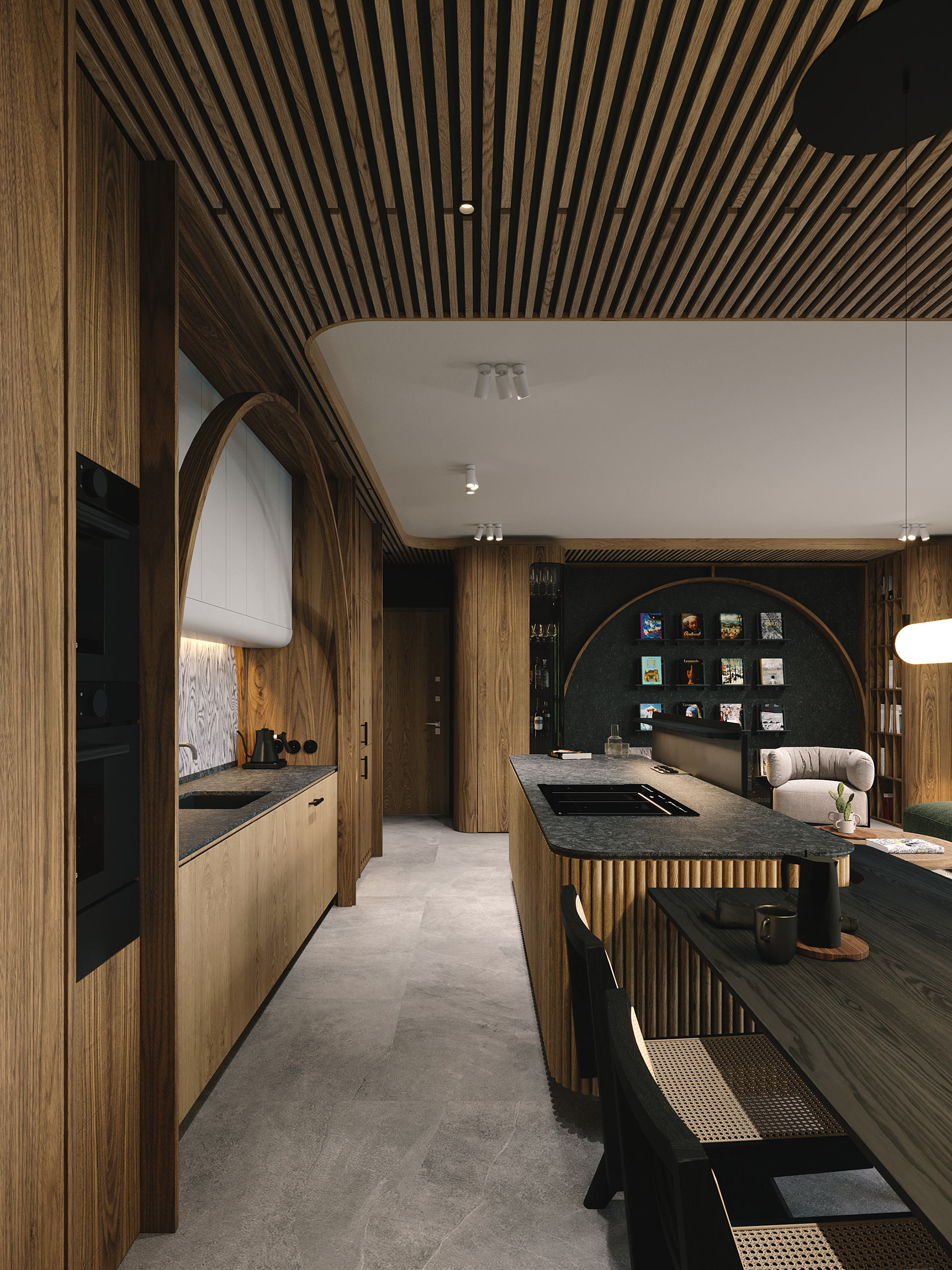
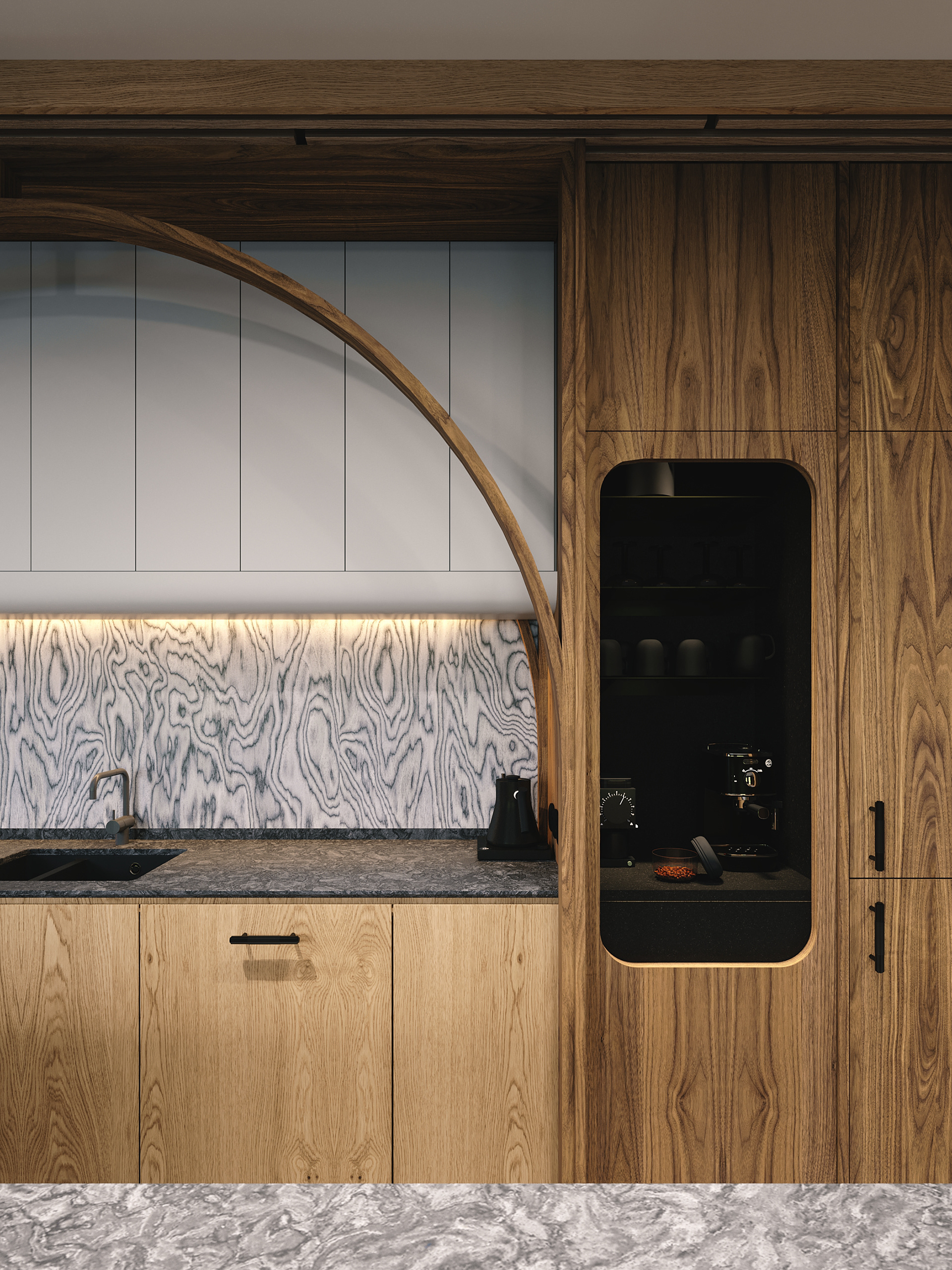
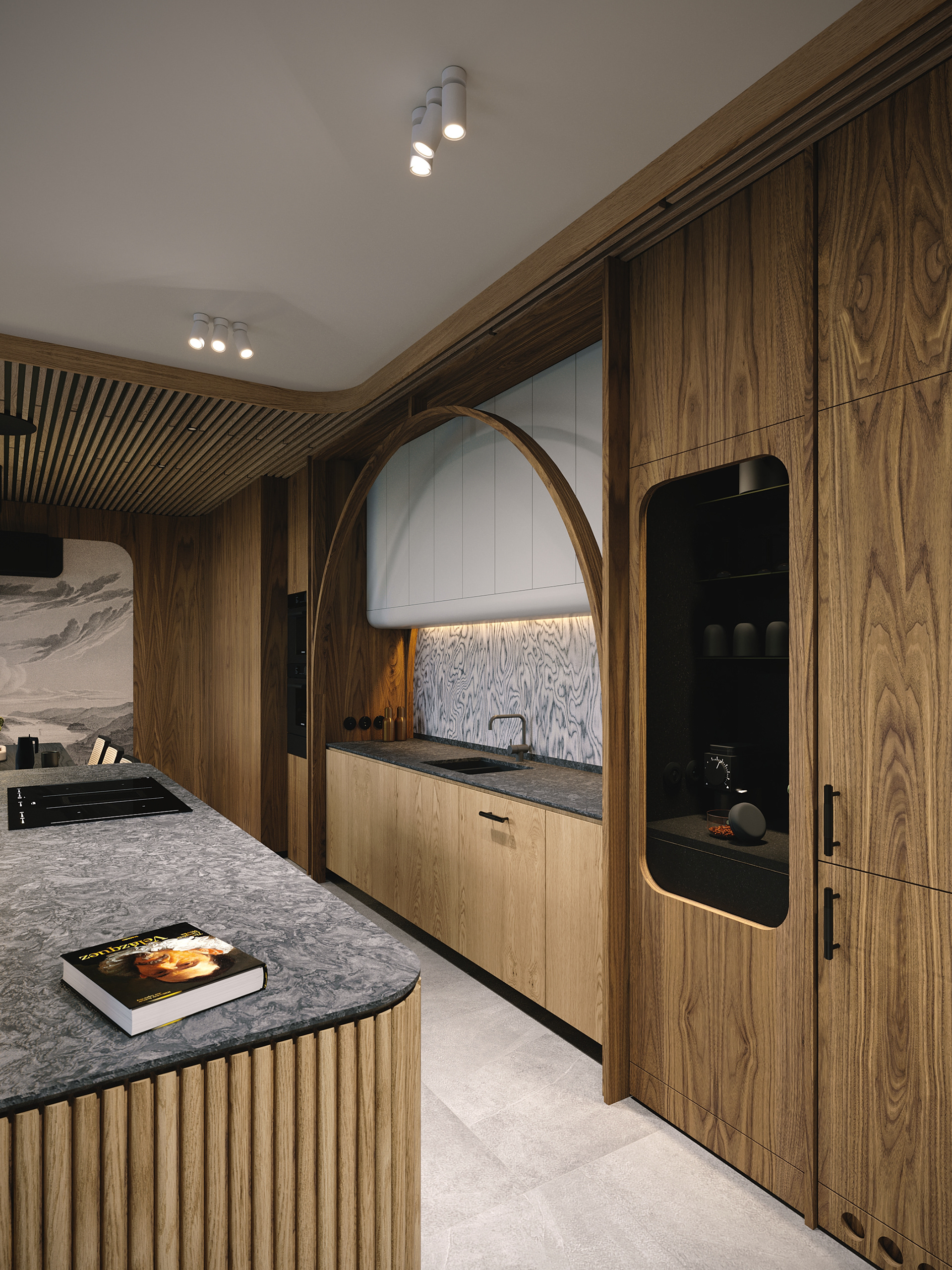
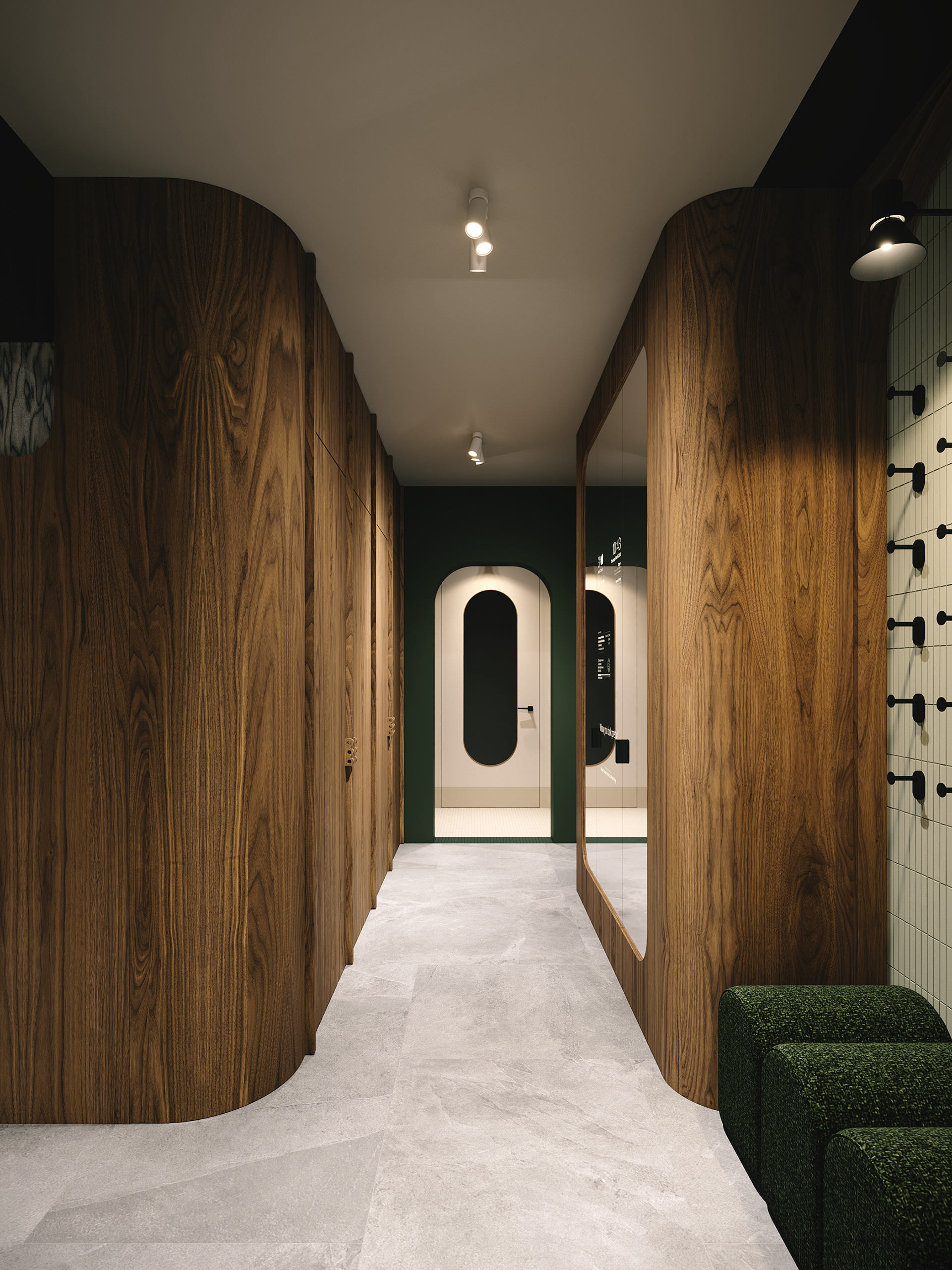
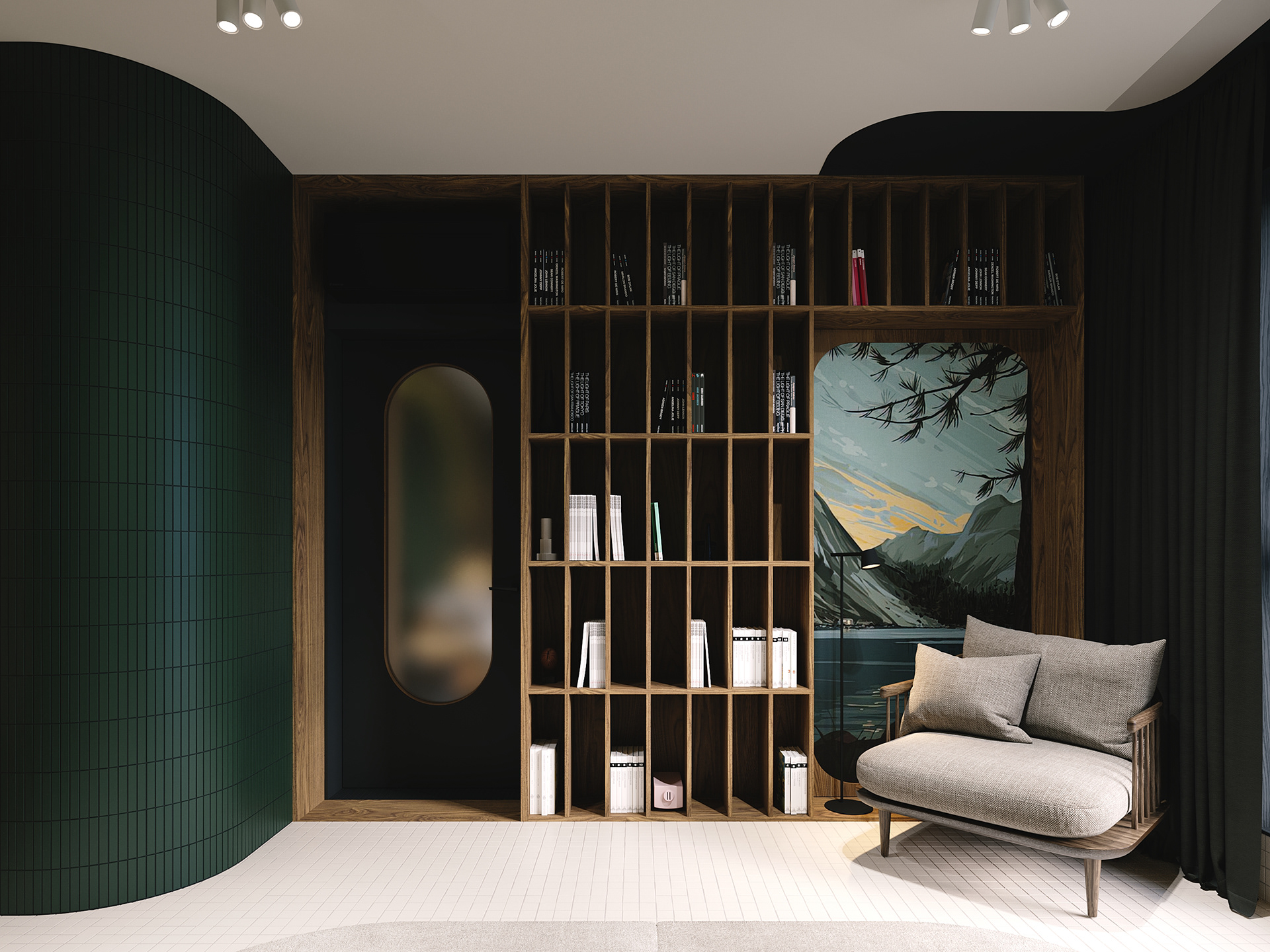
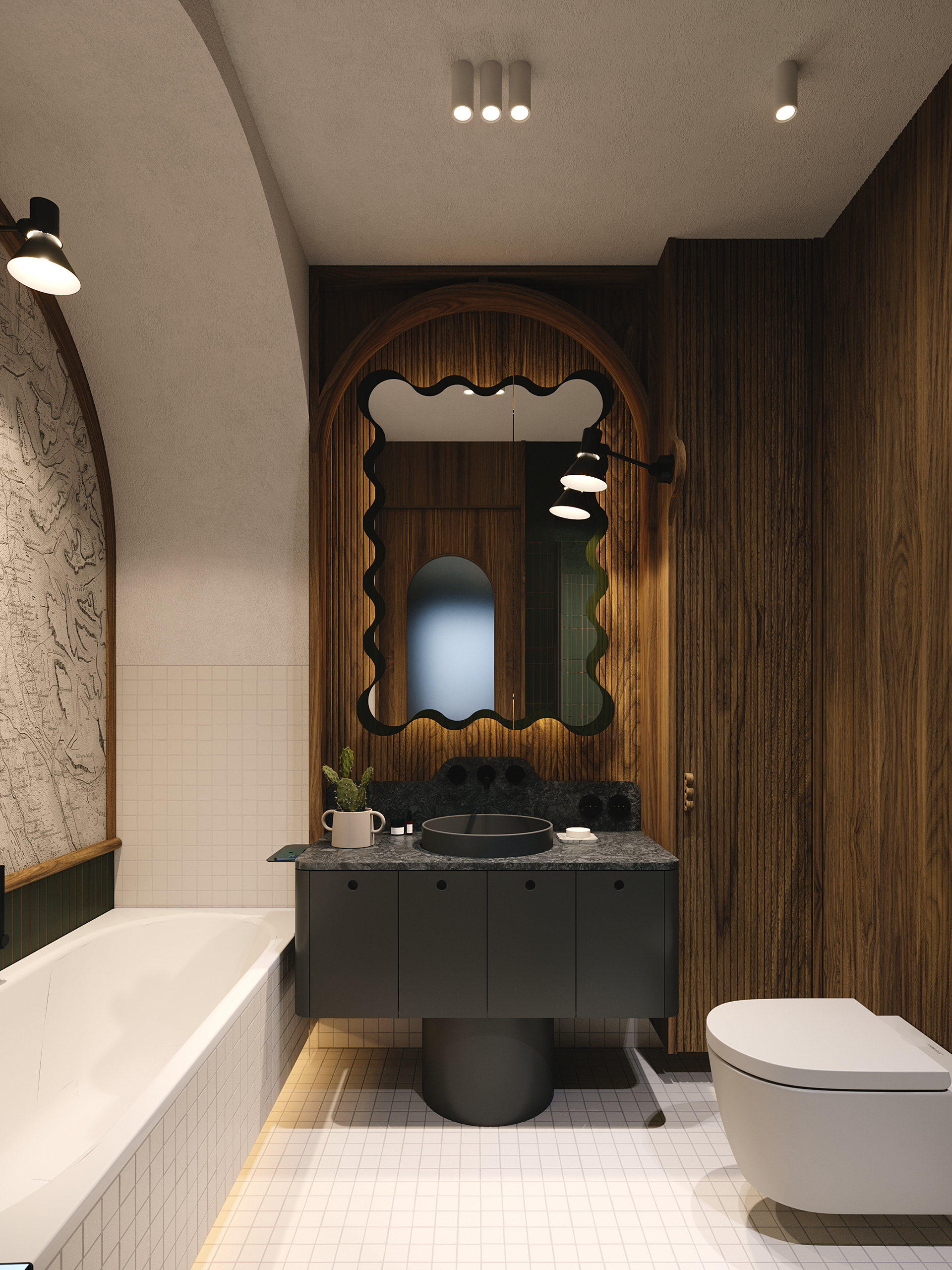
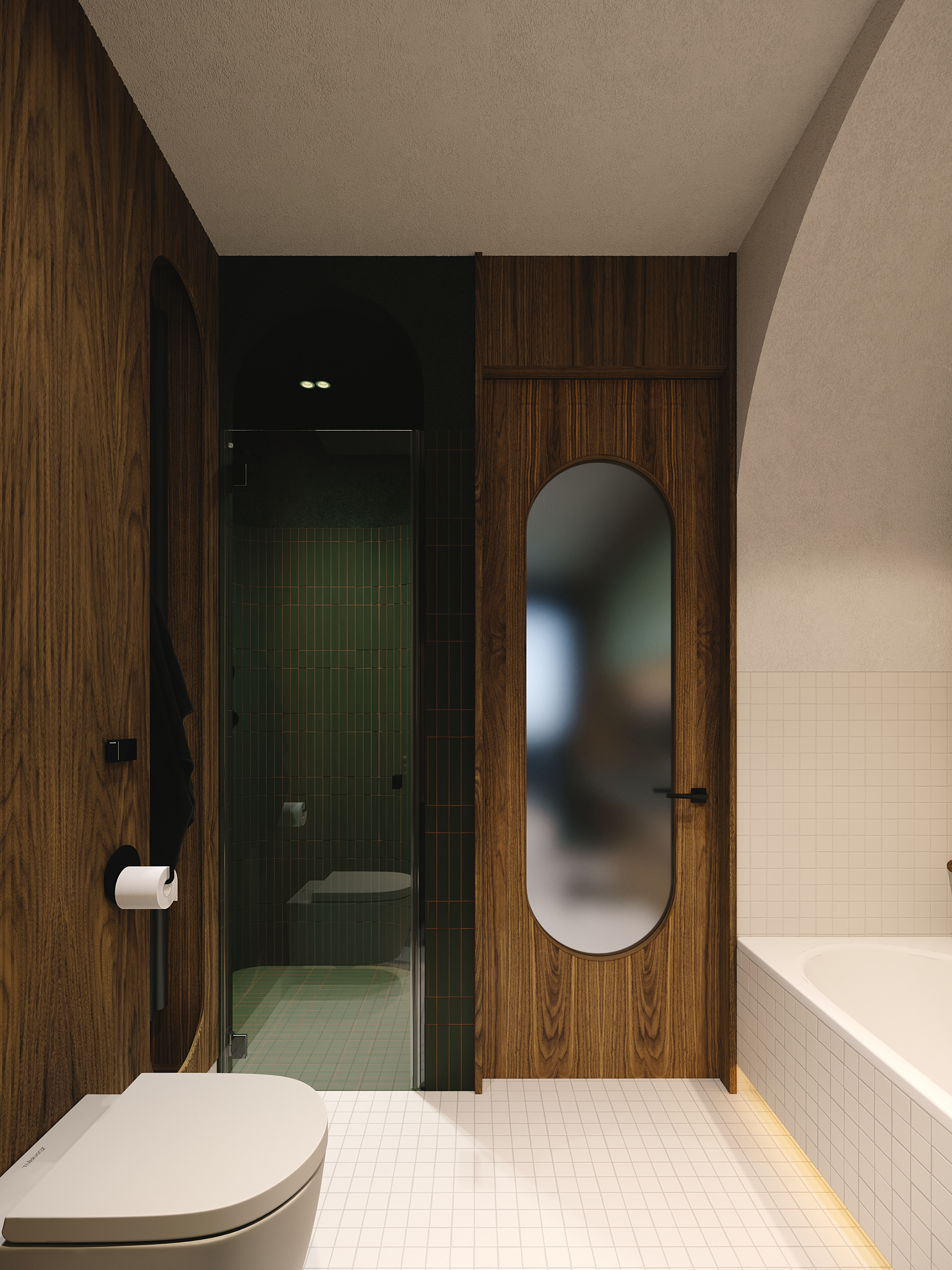
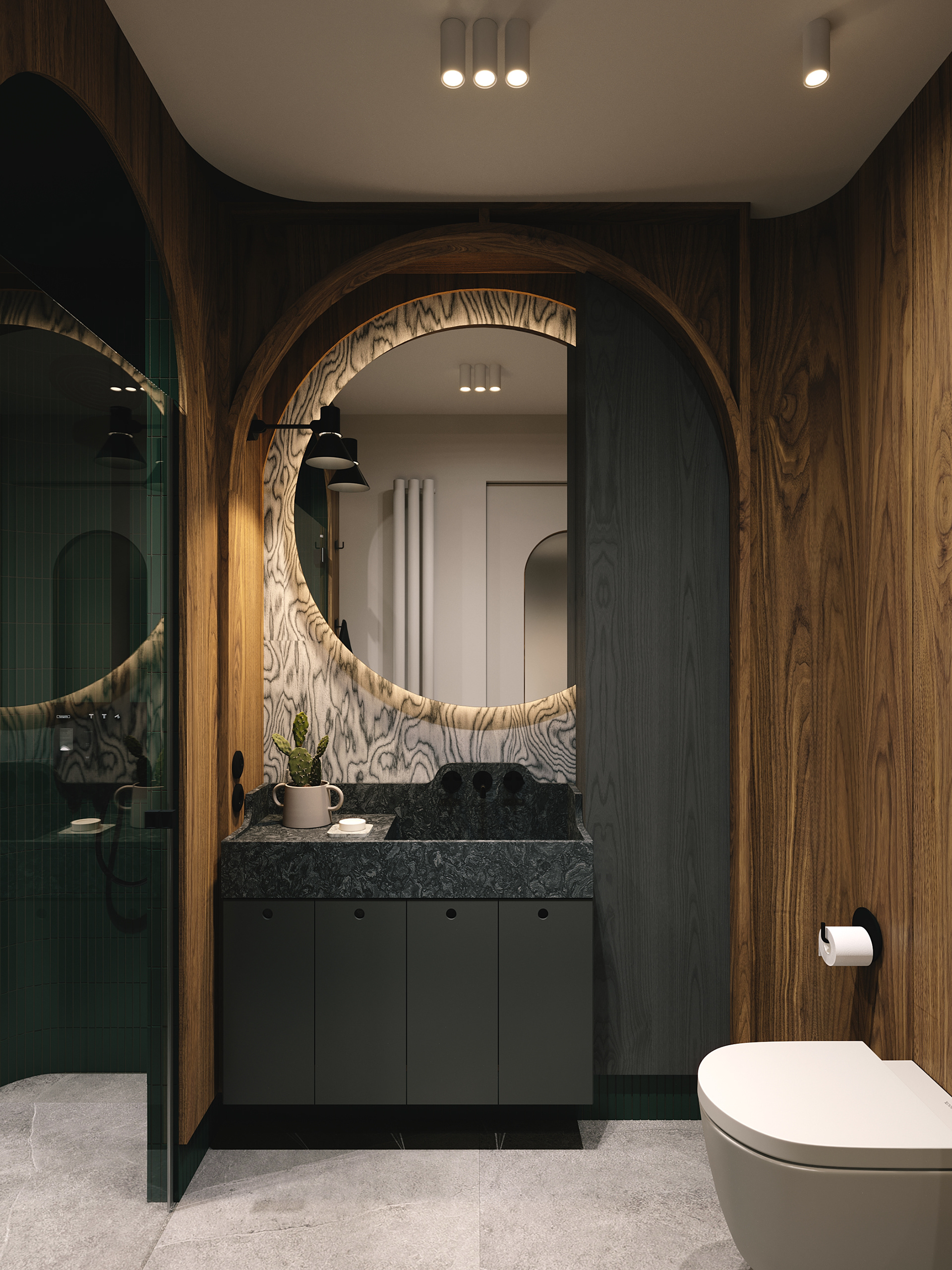
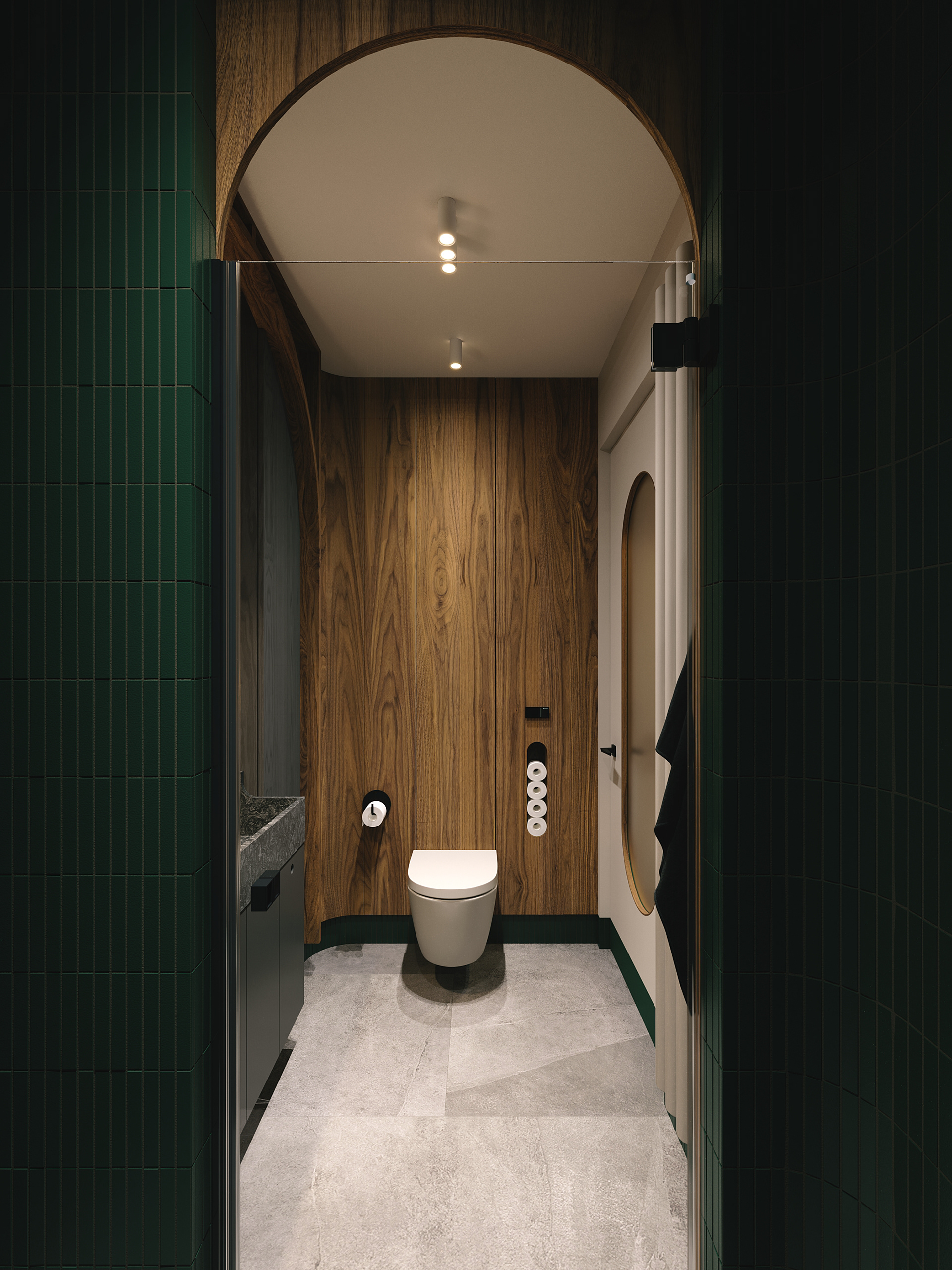
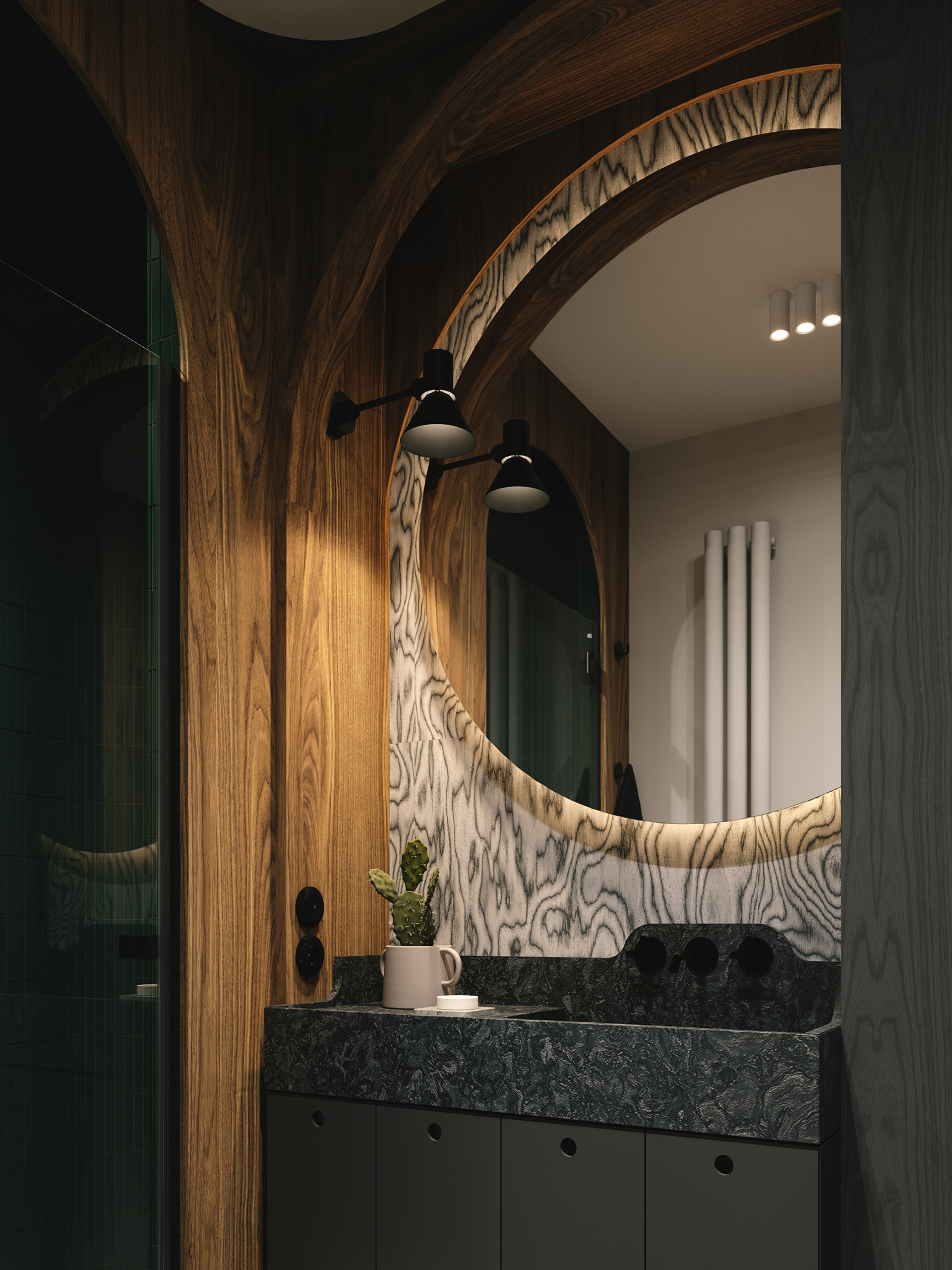
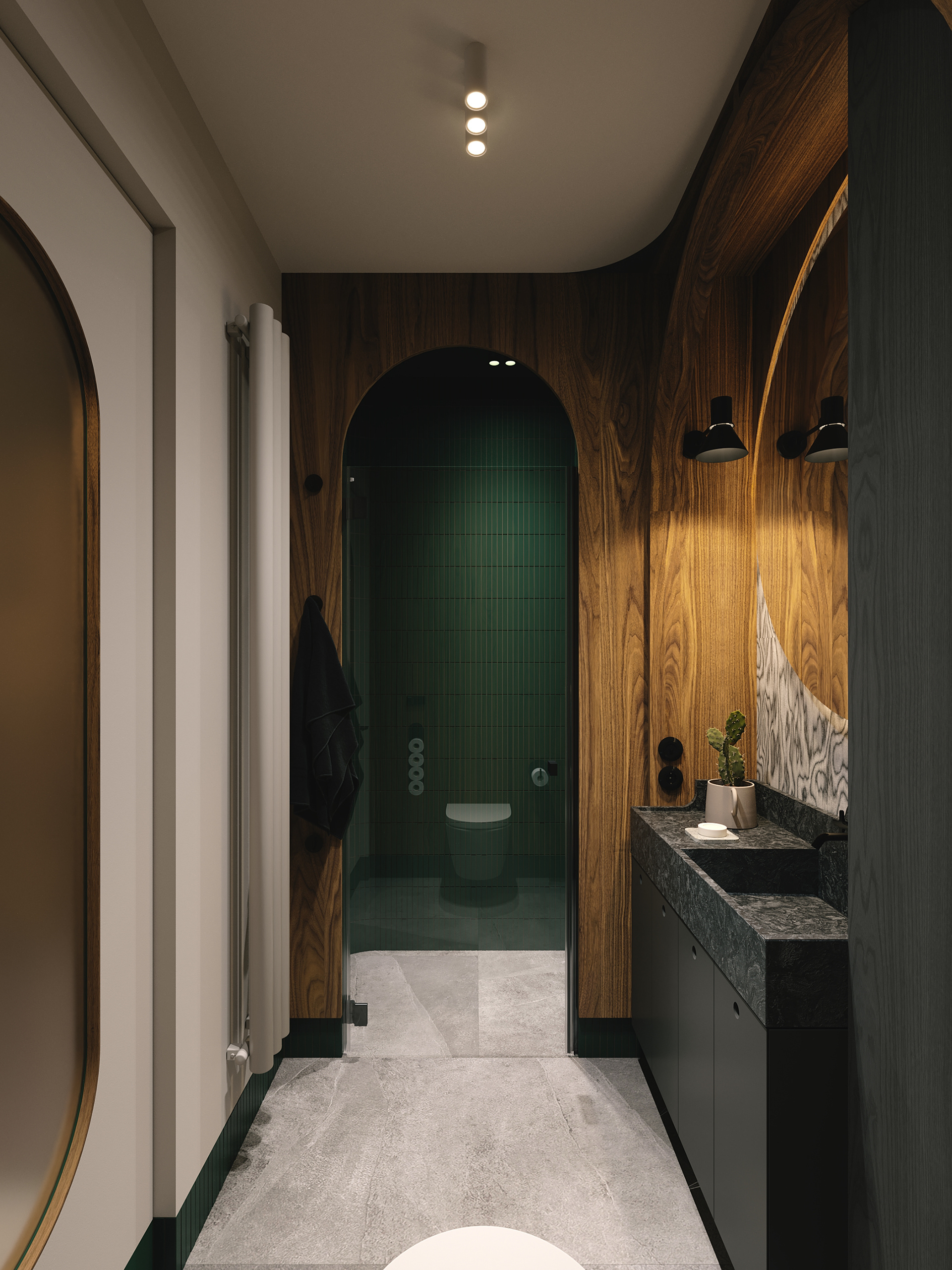
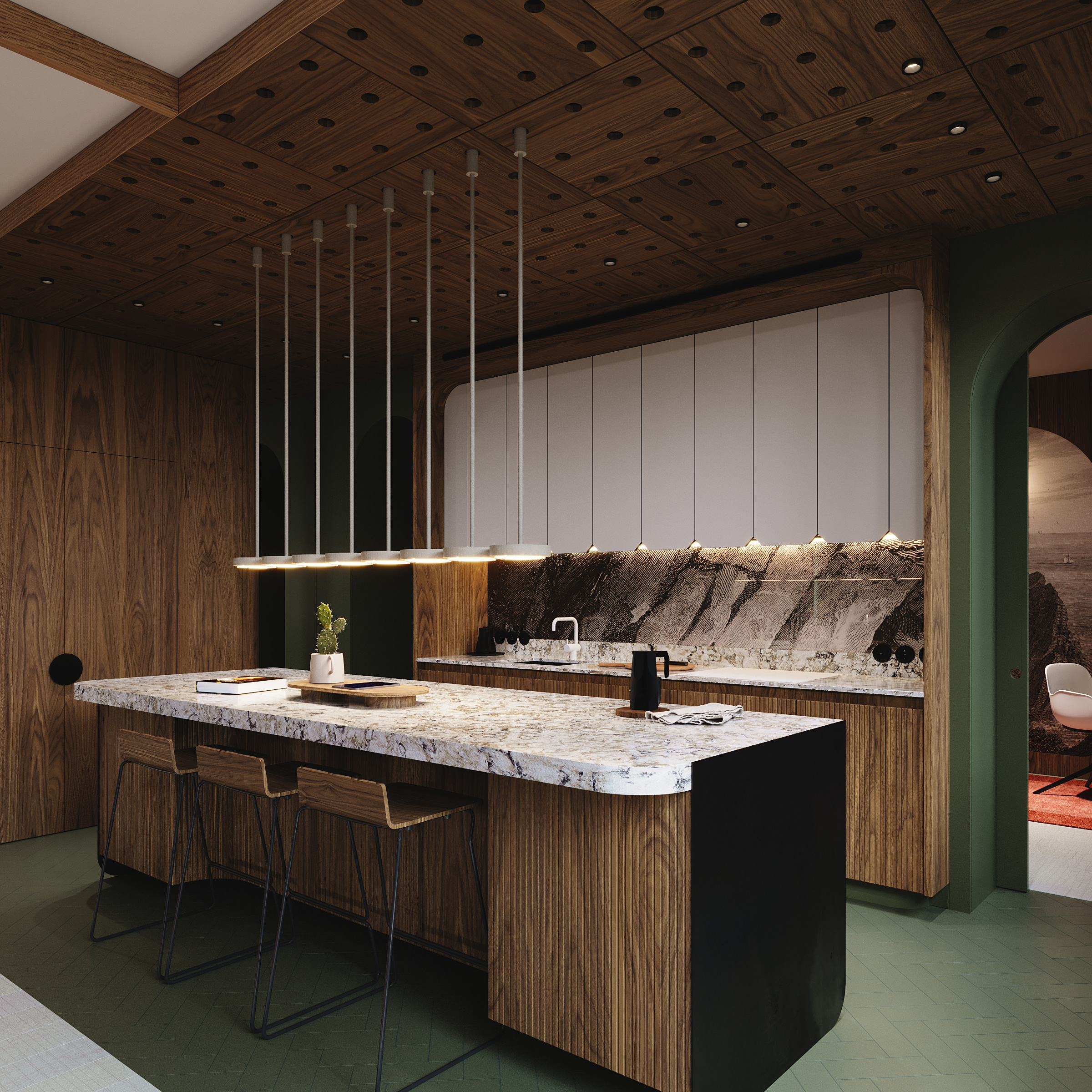
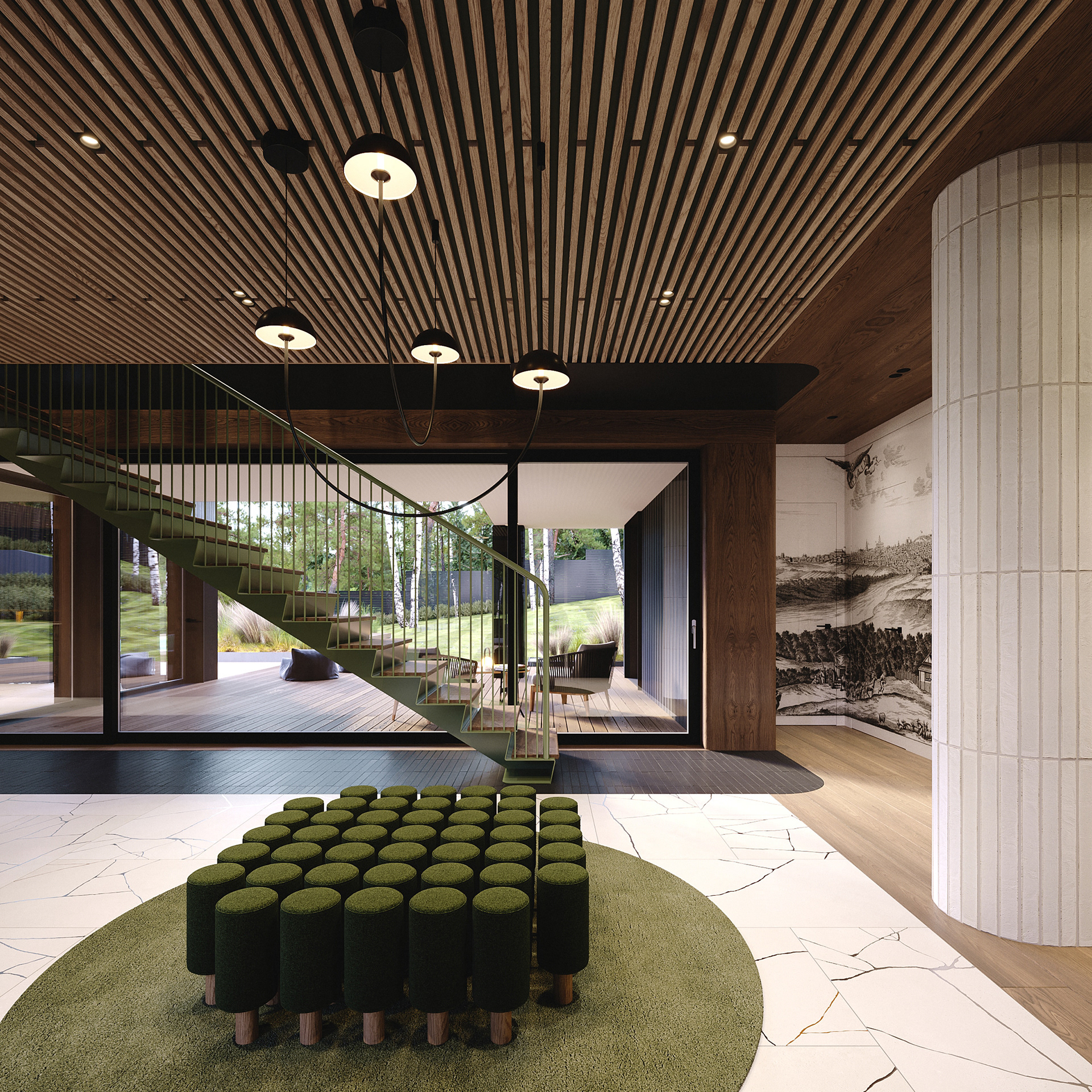
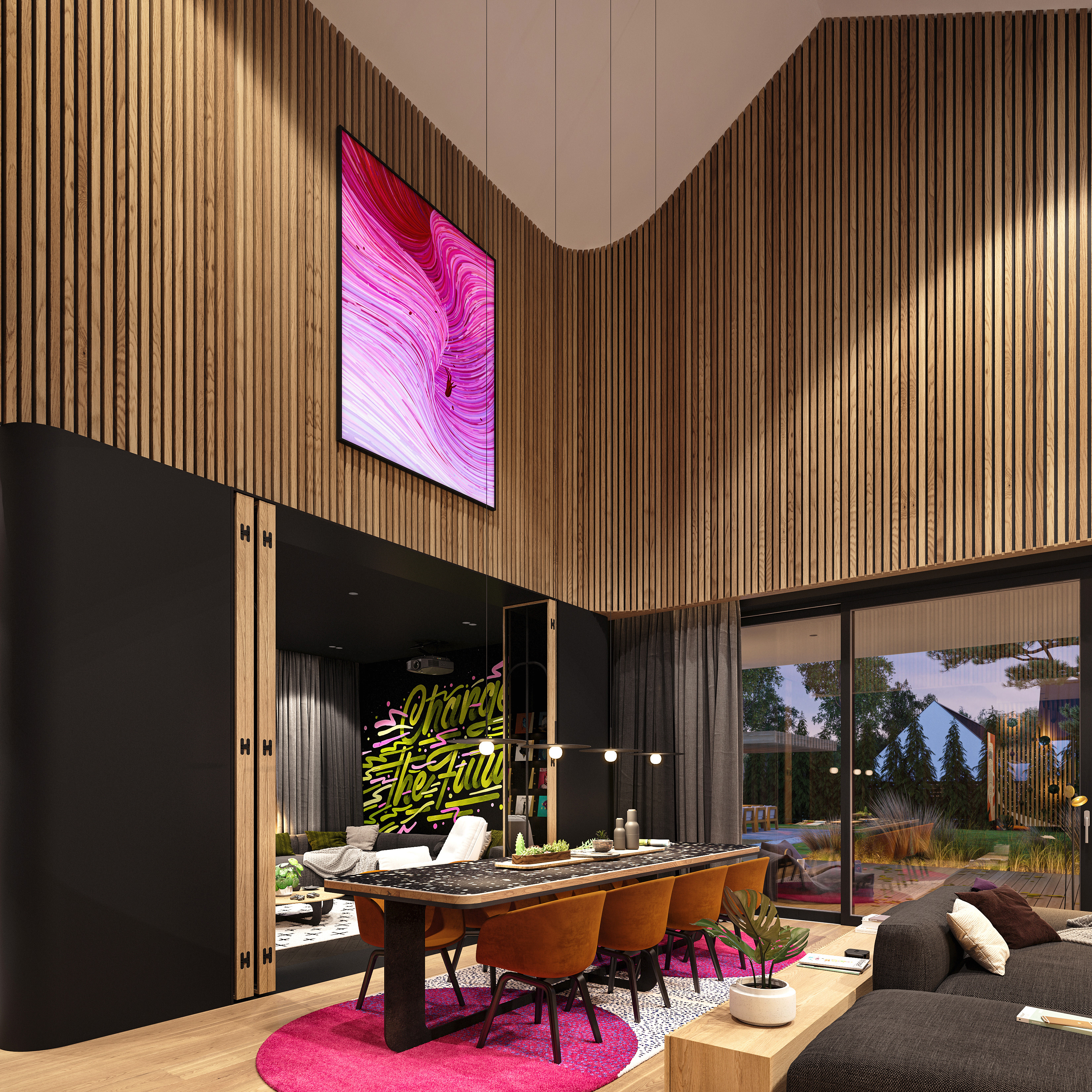
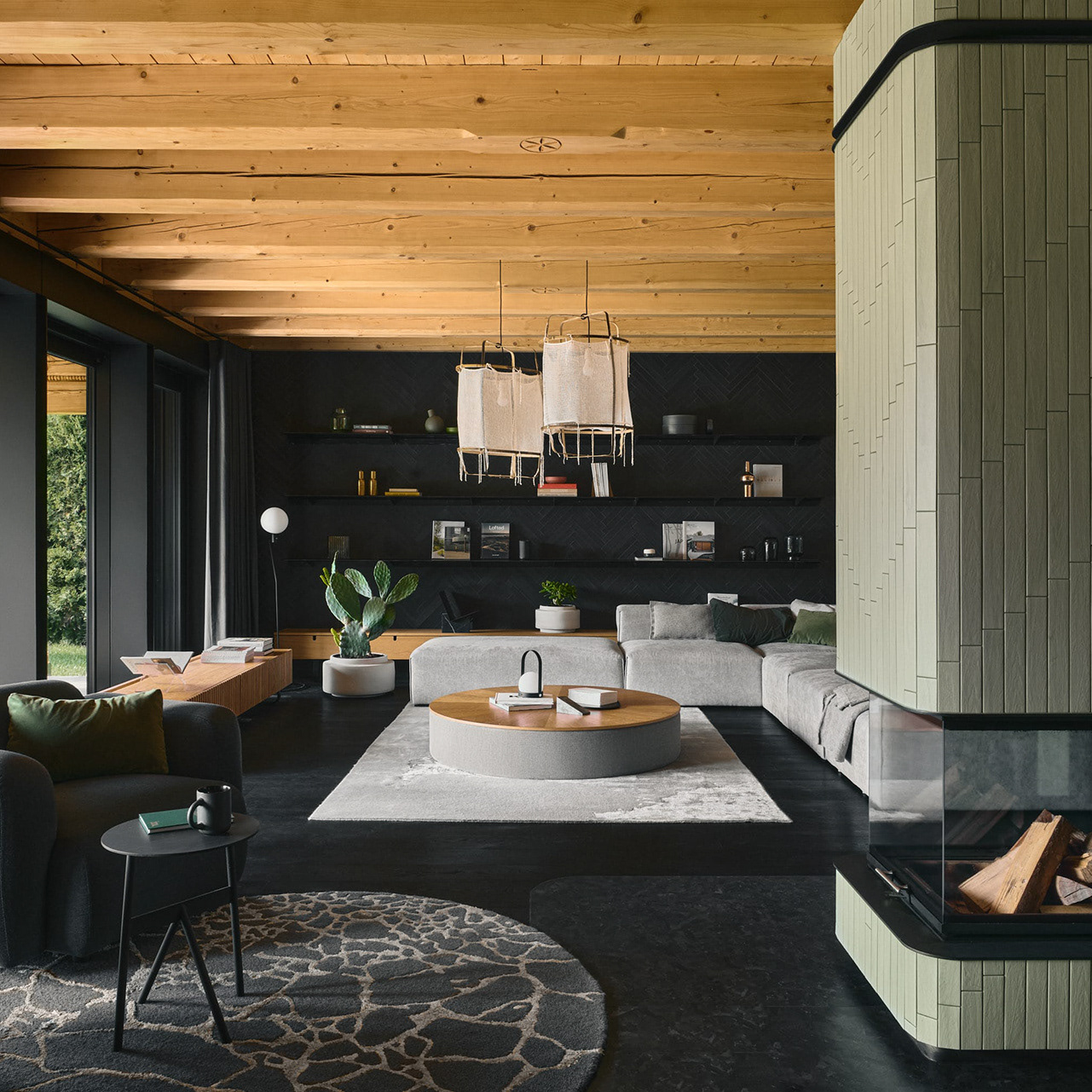
Projekt buduje swoją tożsamość na kontrolowanym napięciu między ciepłem a surowością. Bazą jest szlachetne, głęboko rysujące się orzechowe drewno – miękkie w odbiorze, otulające, niemal zmysłowe. Zostaje ono świadomie skonfrontowane z materią pierwotną: kamieniem o rysunku przypominającym zastygłą lawę, chłodnymi posadzkami i powierzchniami, które wyglądają jak uchwycony w ruchu płynny minerał. Ten kontrast przywołuje skojarzenia z islandzkim spa – miejscem, gdzie komfort spotyka dzikość natury.
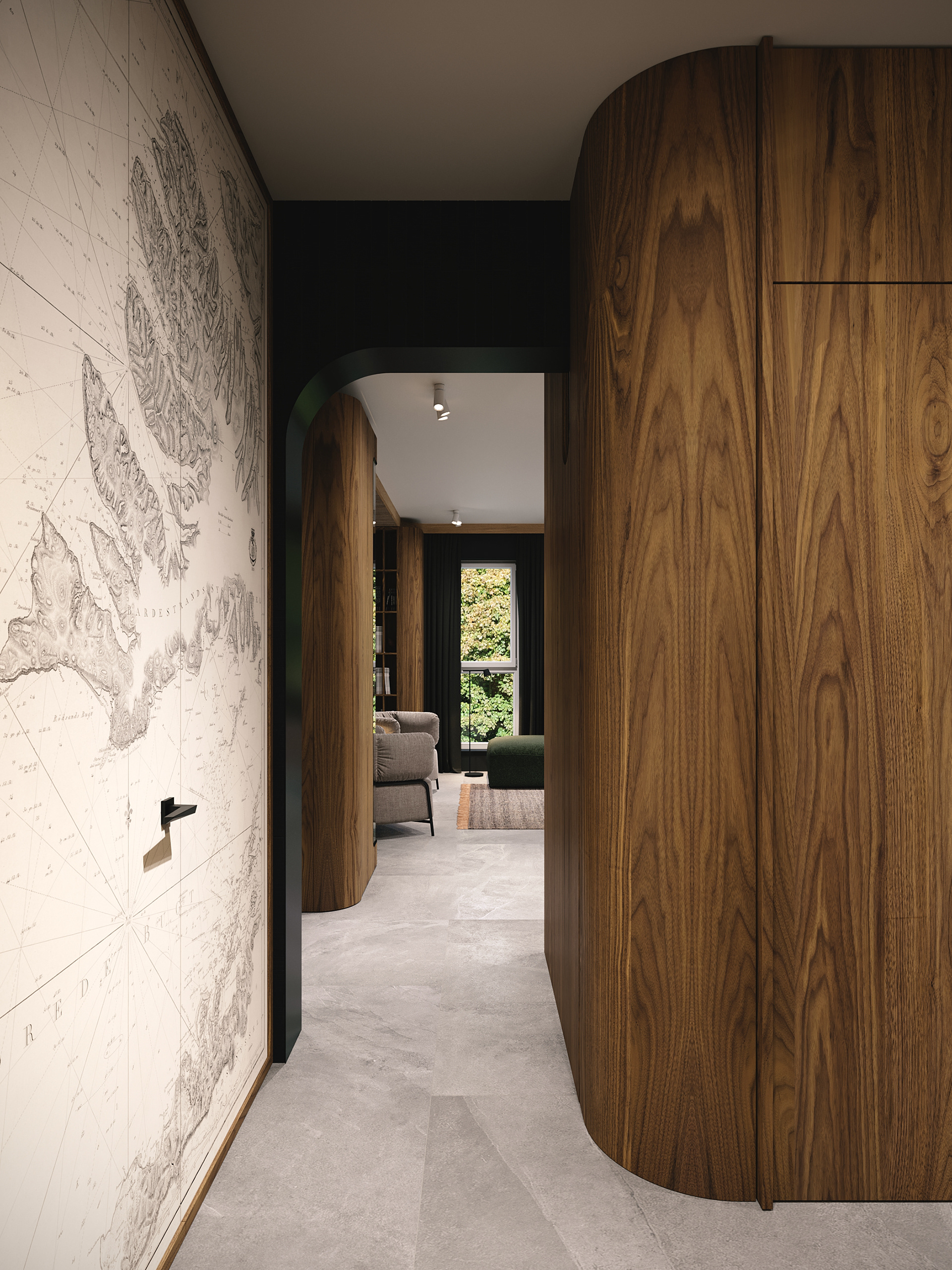
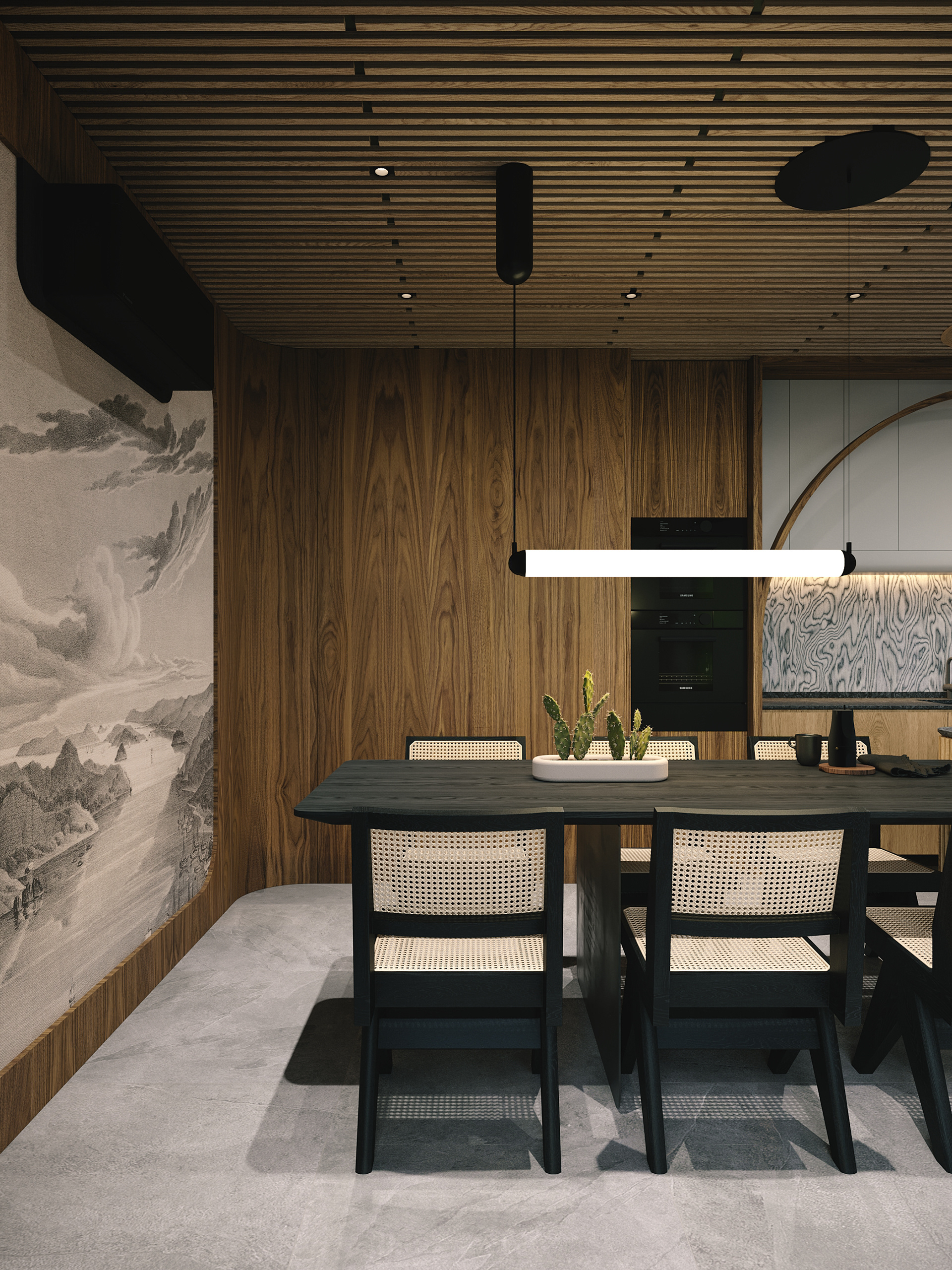
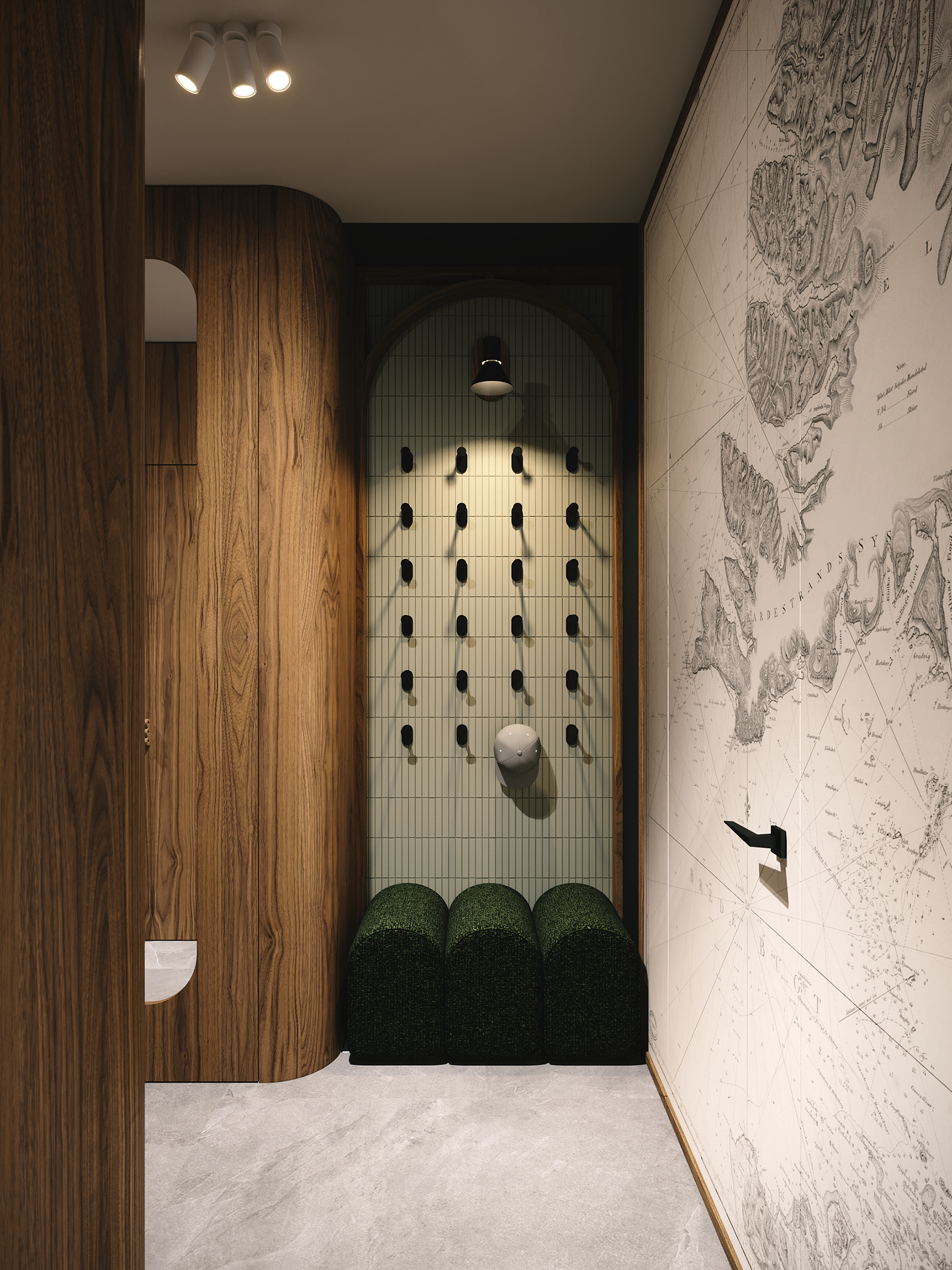
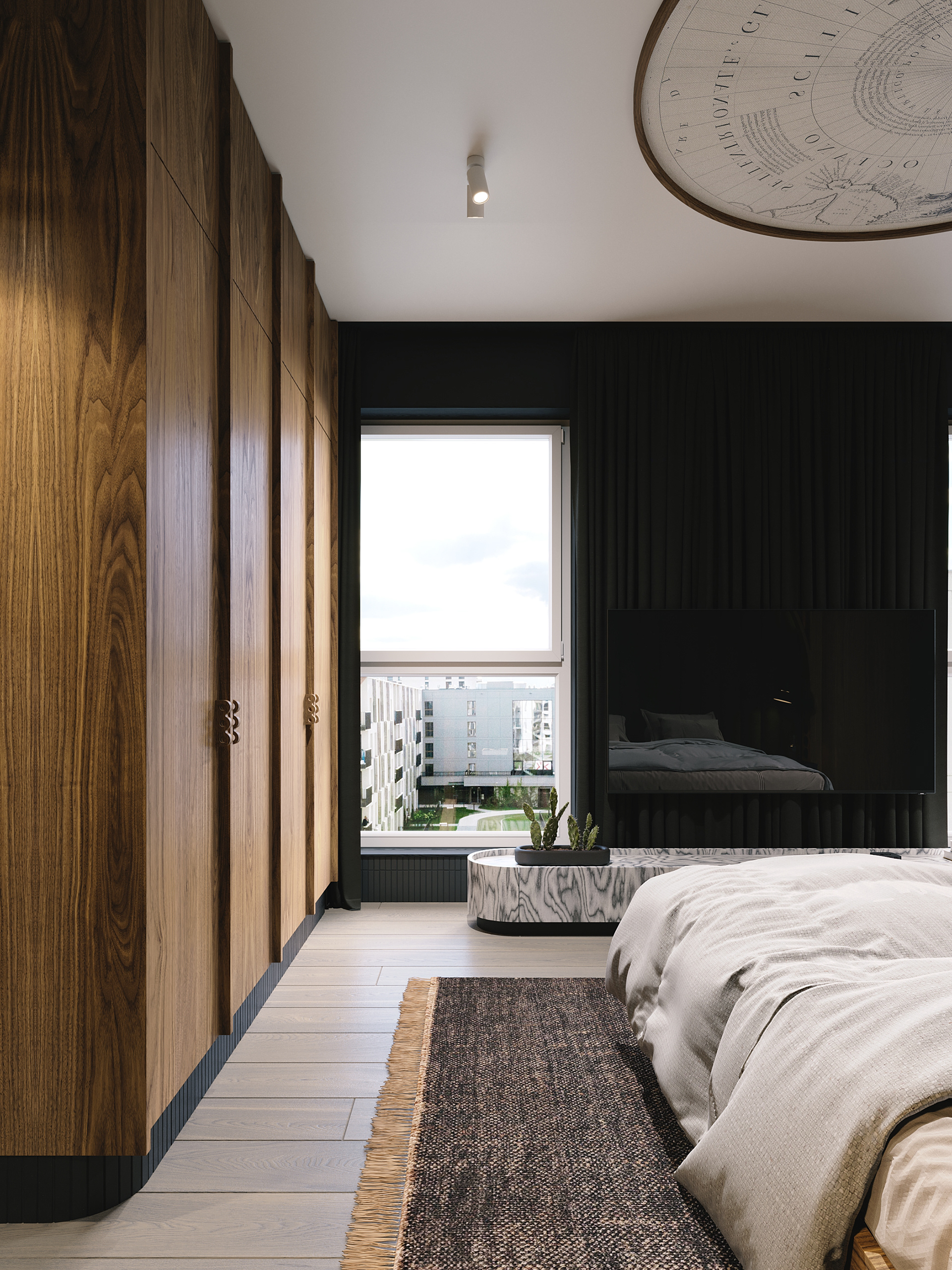
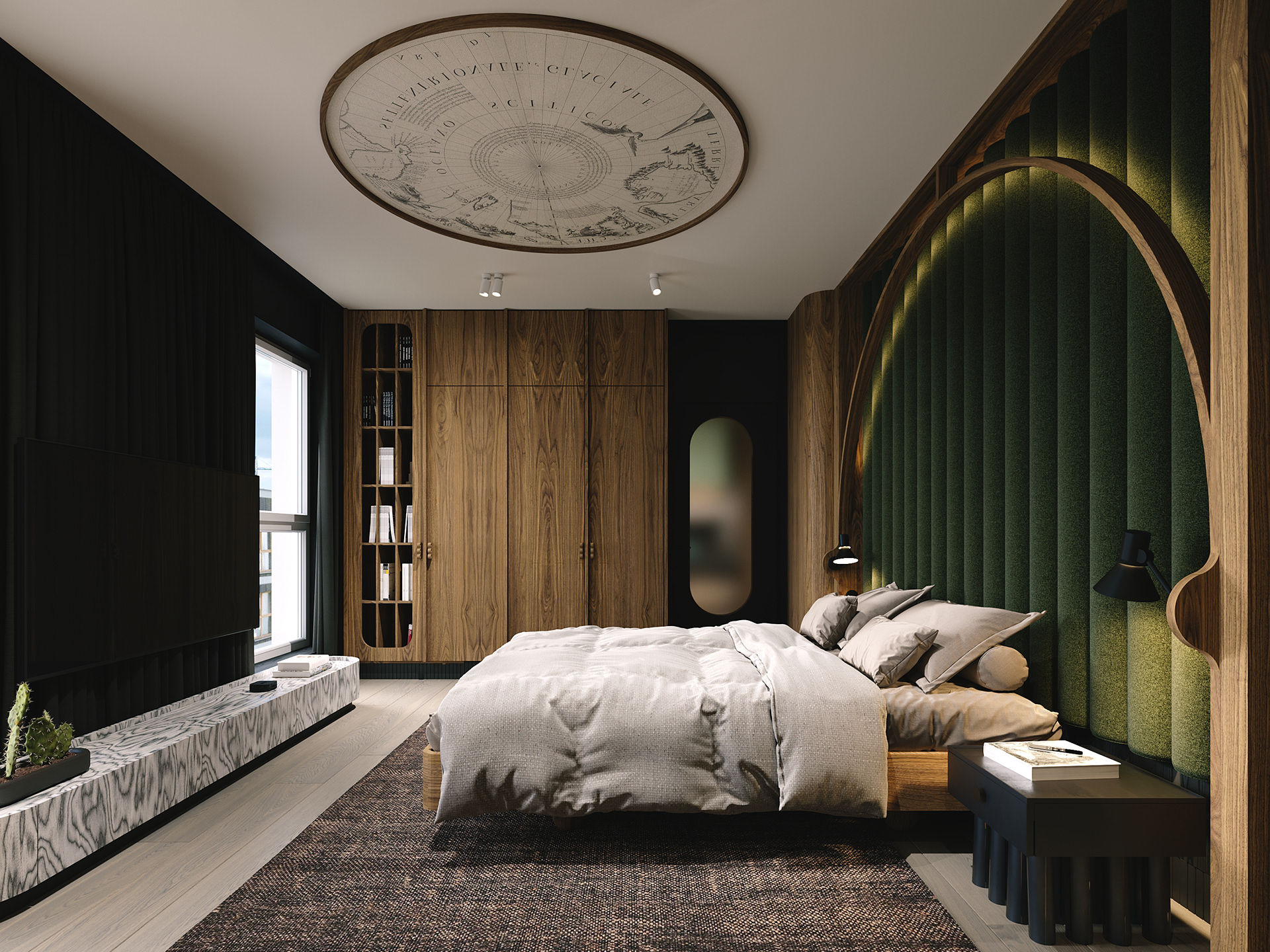
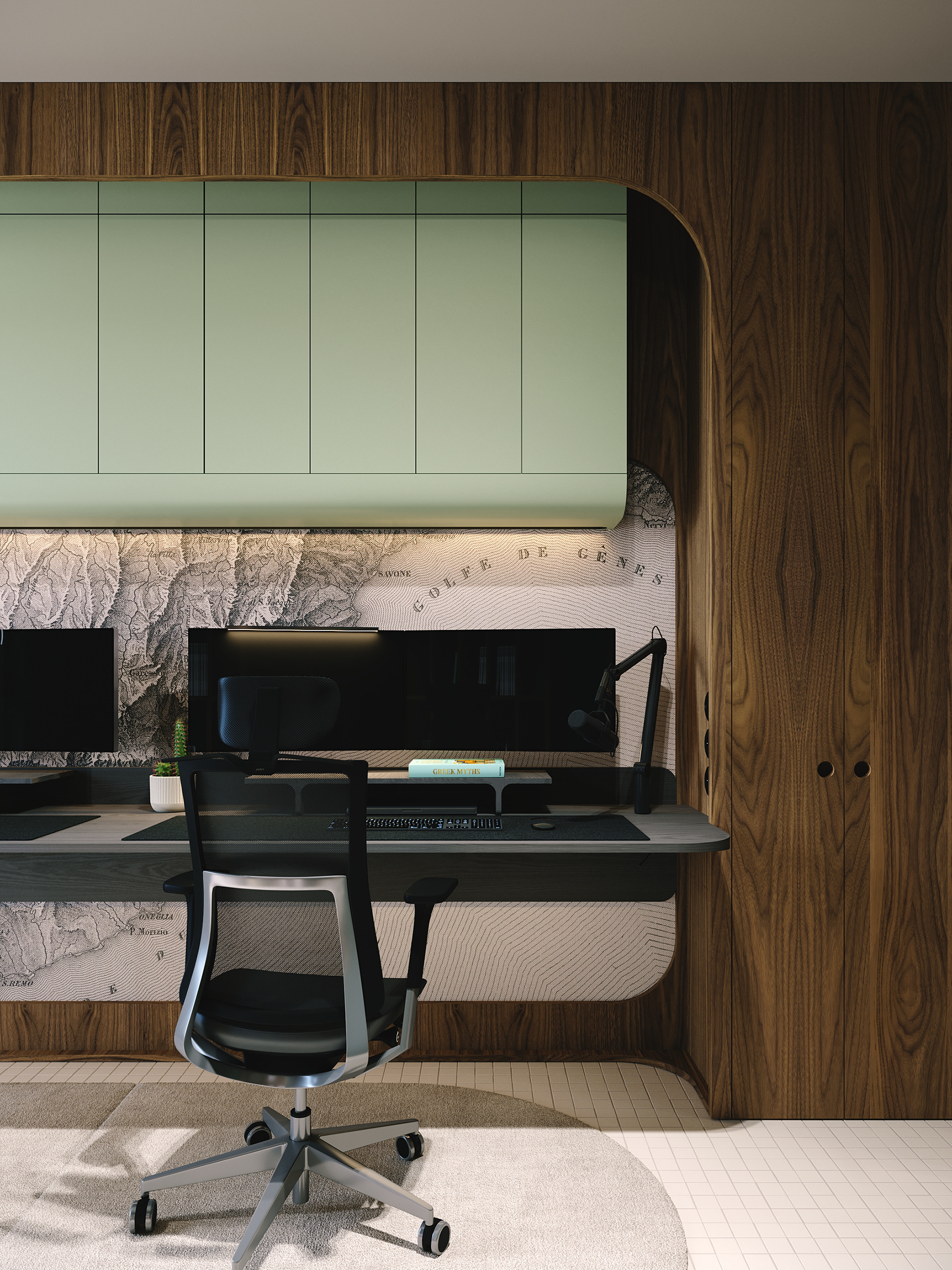
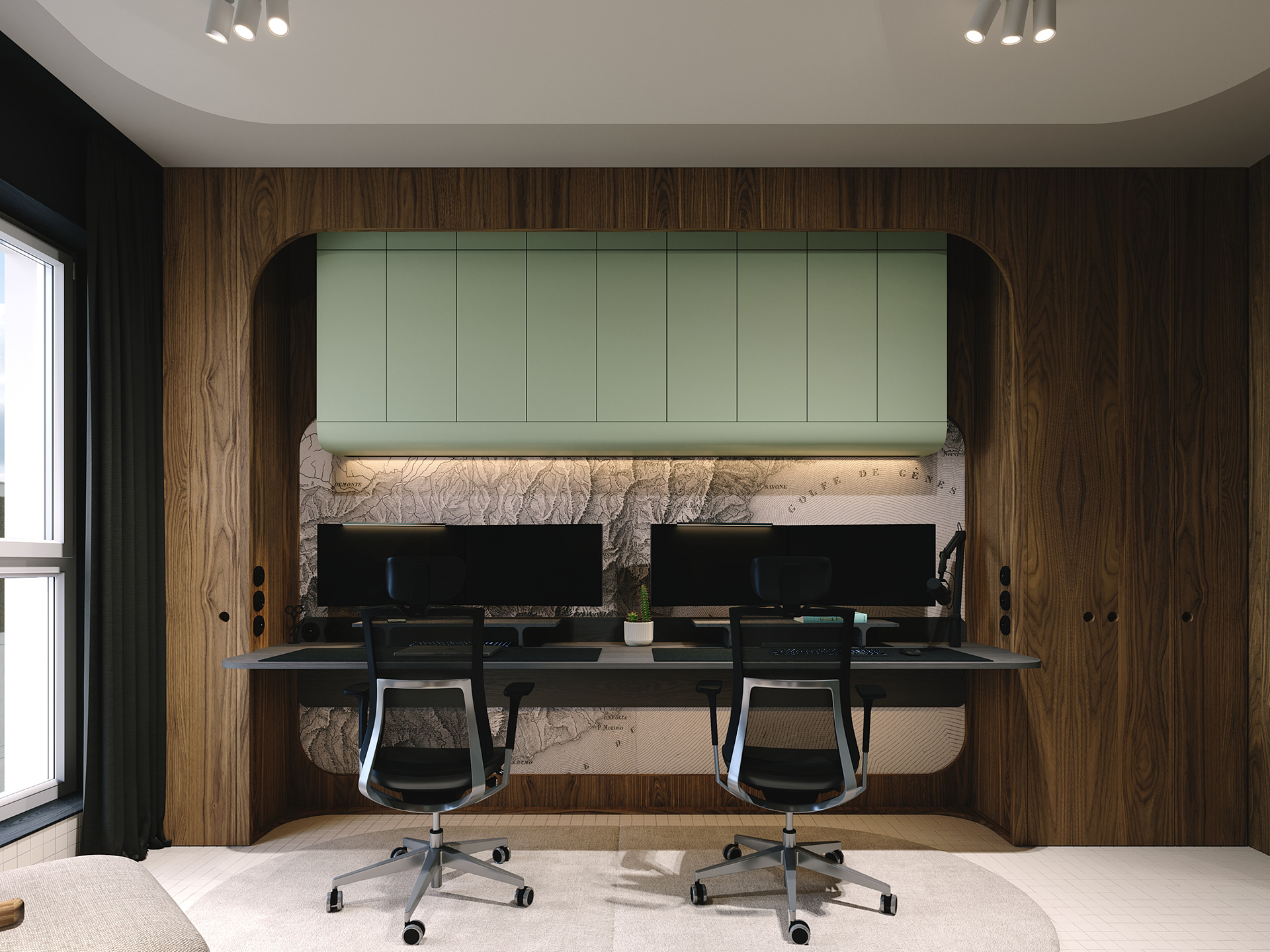
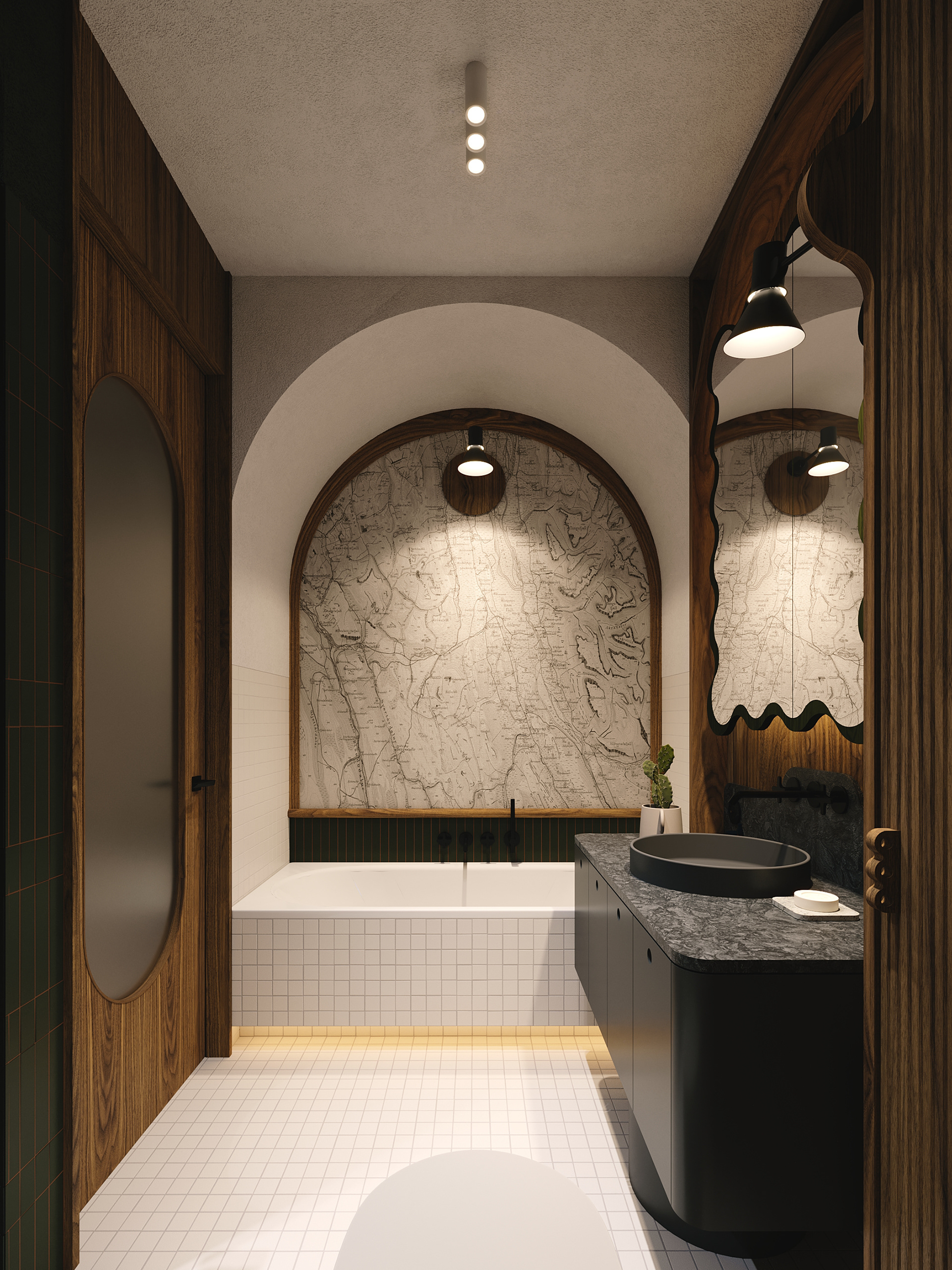
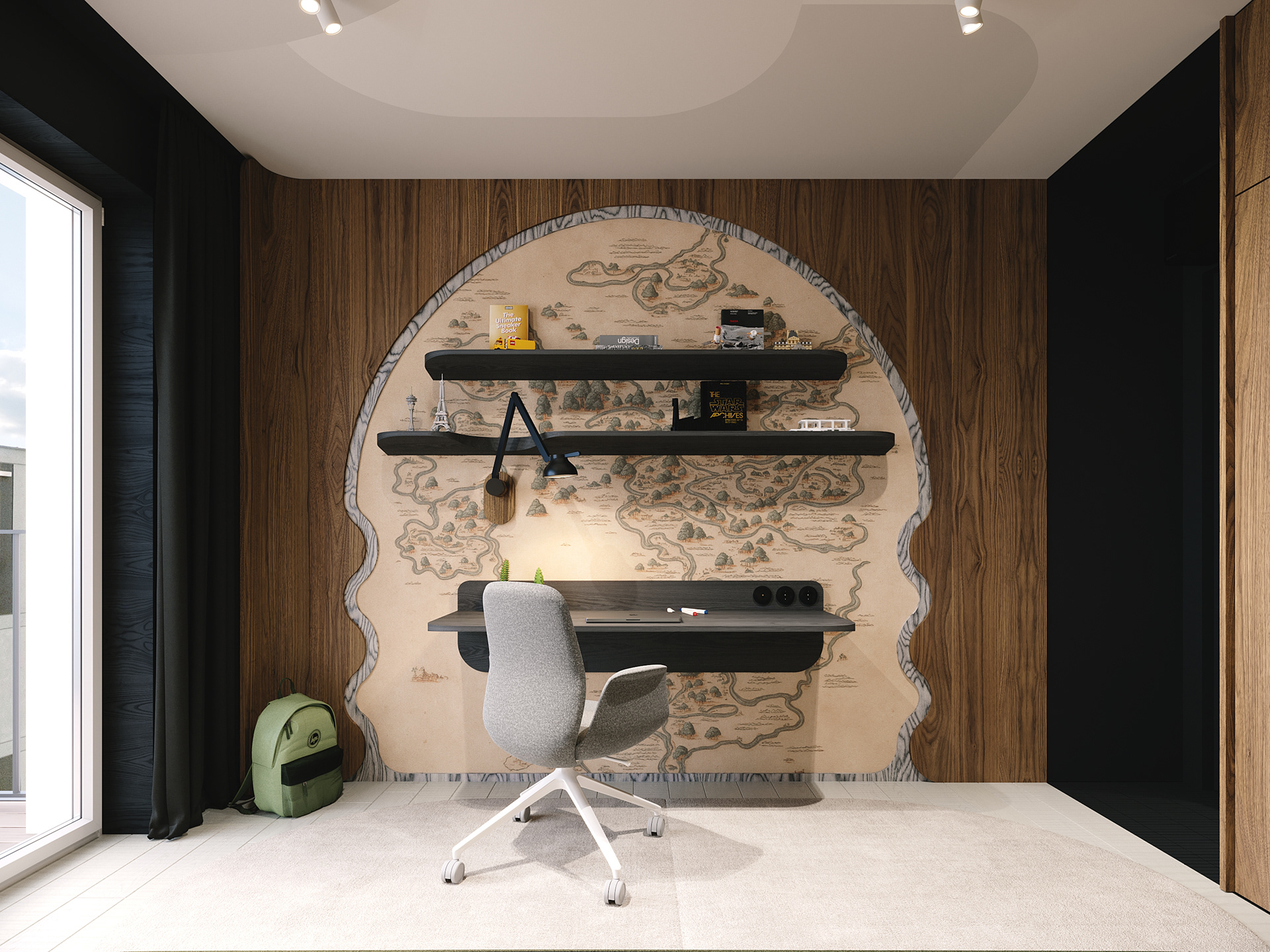
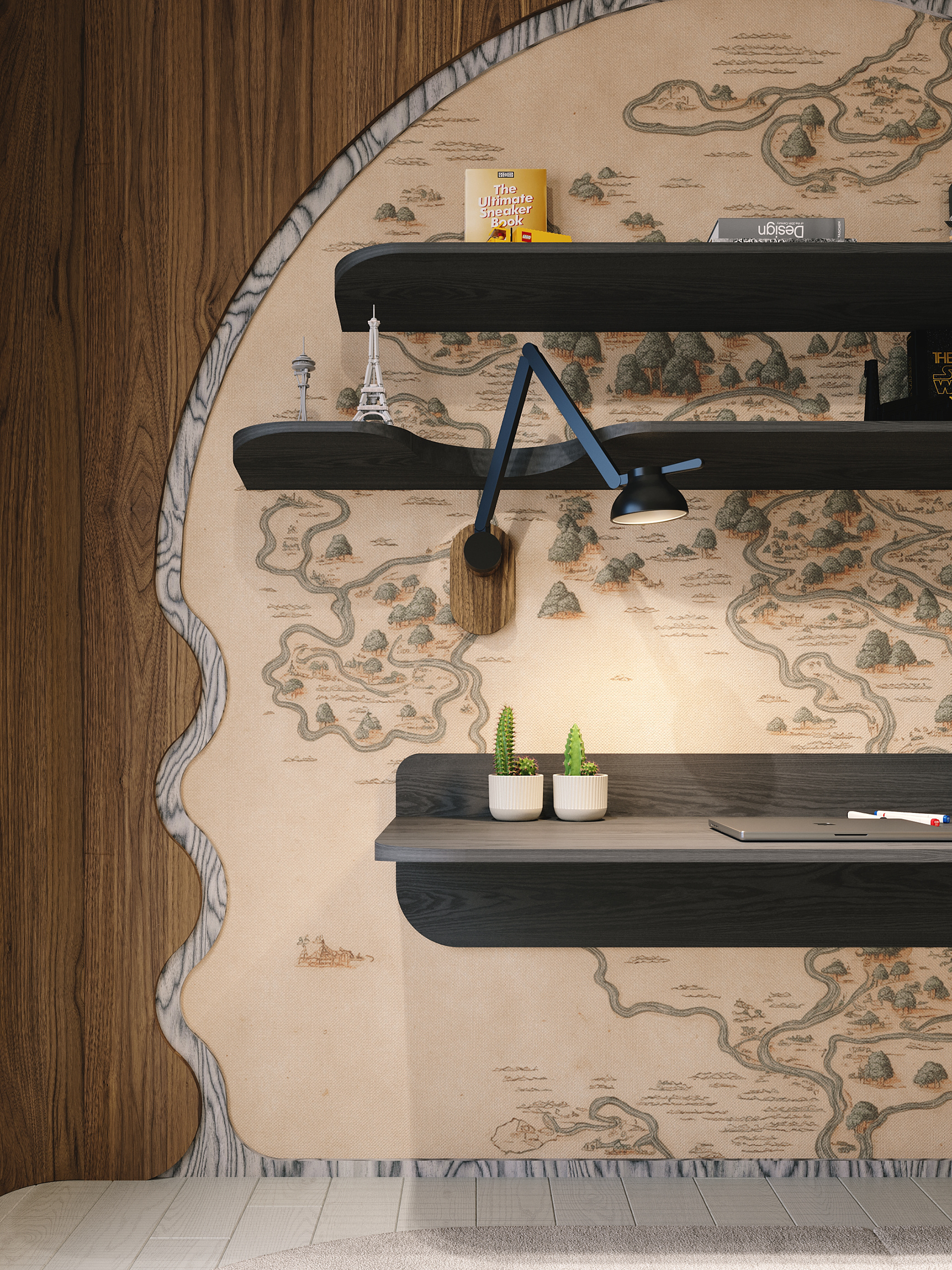
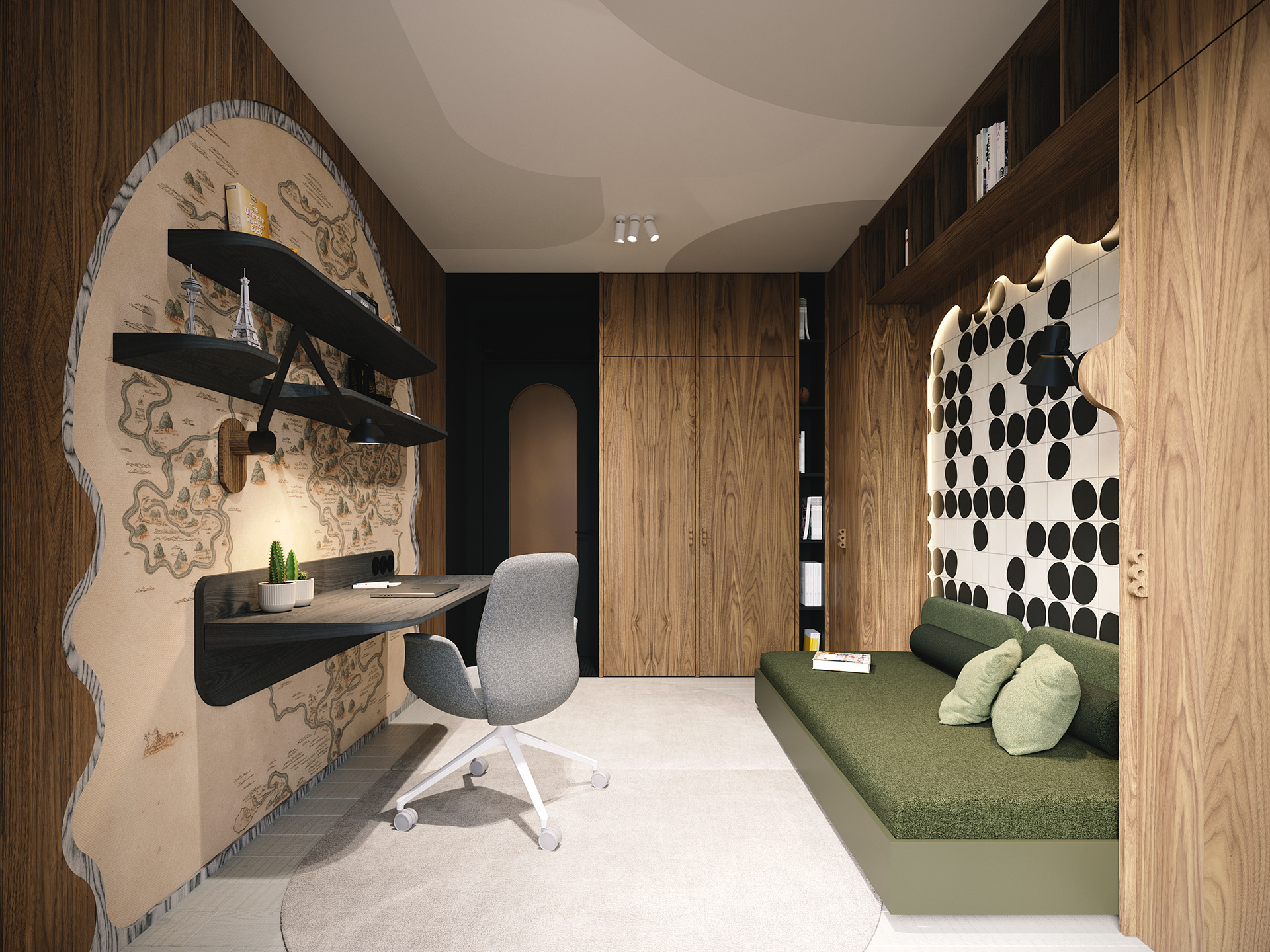
Warstwa narracyjna wnętrza opiera się na motywie odkrywania. XVIII-wieczne mapy i ryciny wprowadzają kontekst podróży i eksploracji, nadając przestrzeni intelektualną głębię i lekko romantyczny rys. Nie są dekoracją – są pretekstem do budowania atmosfery: domu jako azylu odkrywcy.
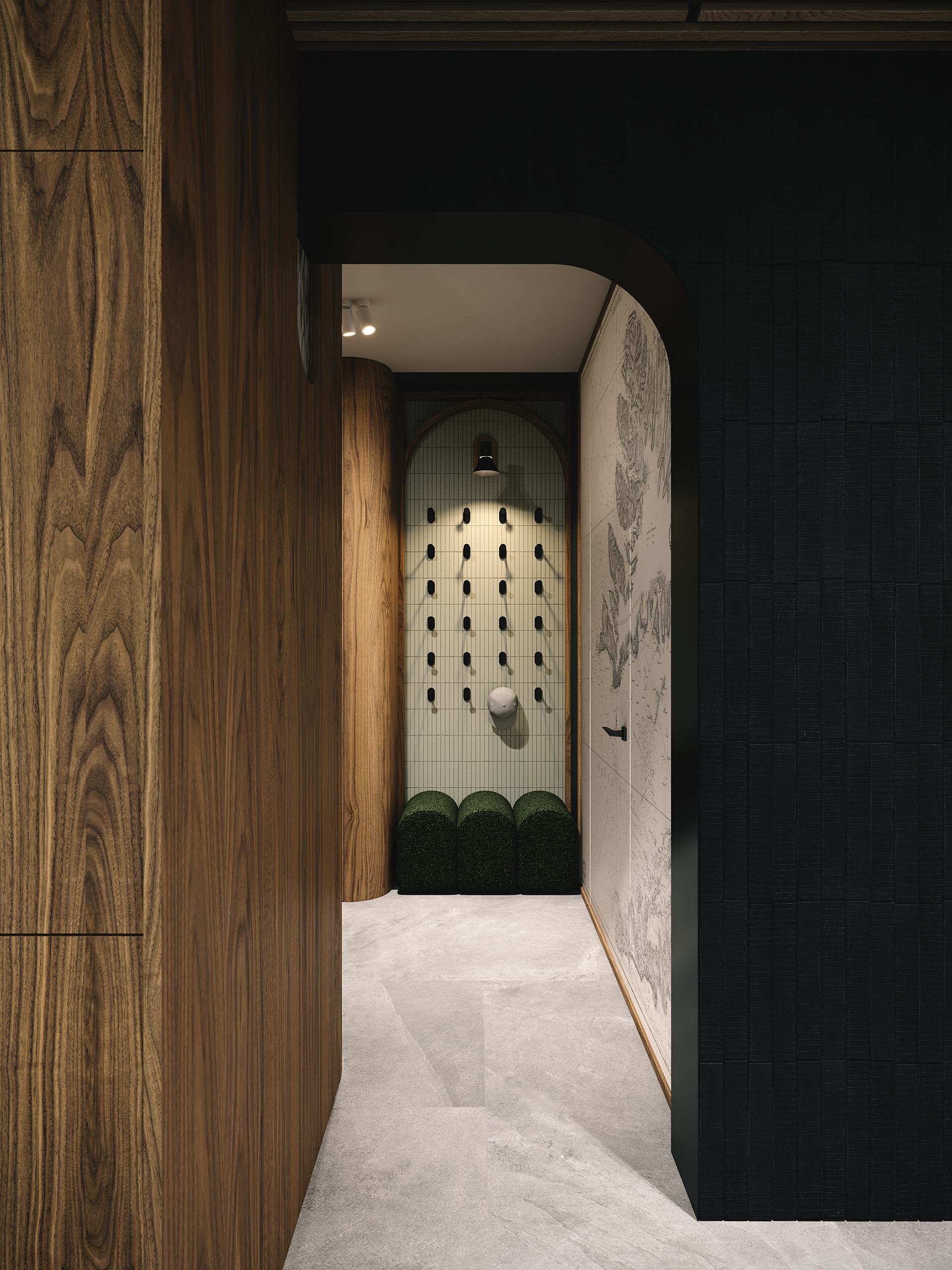
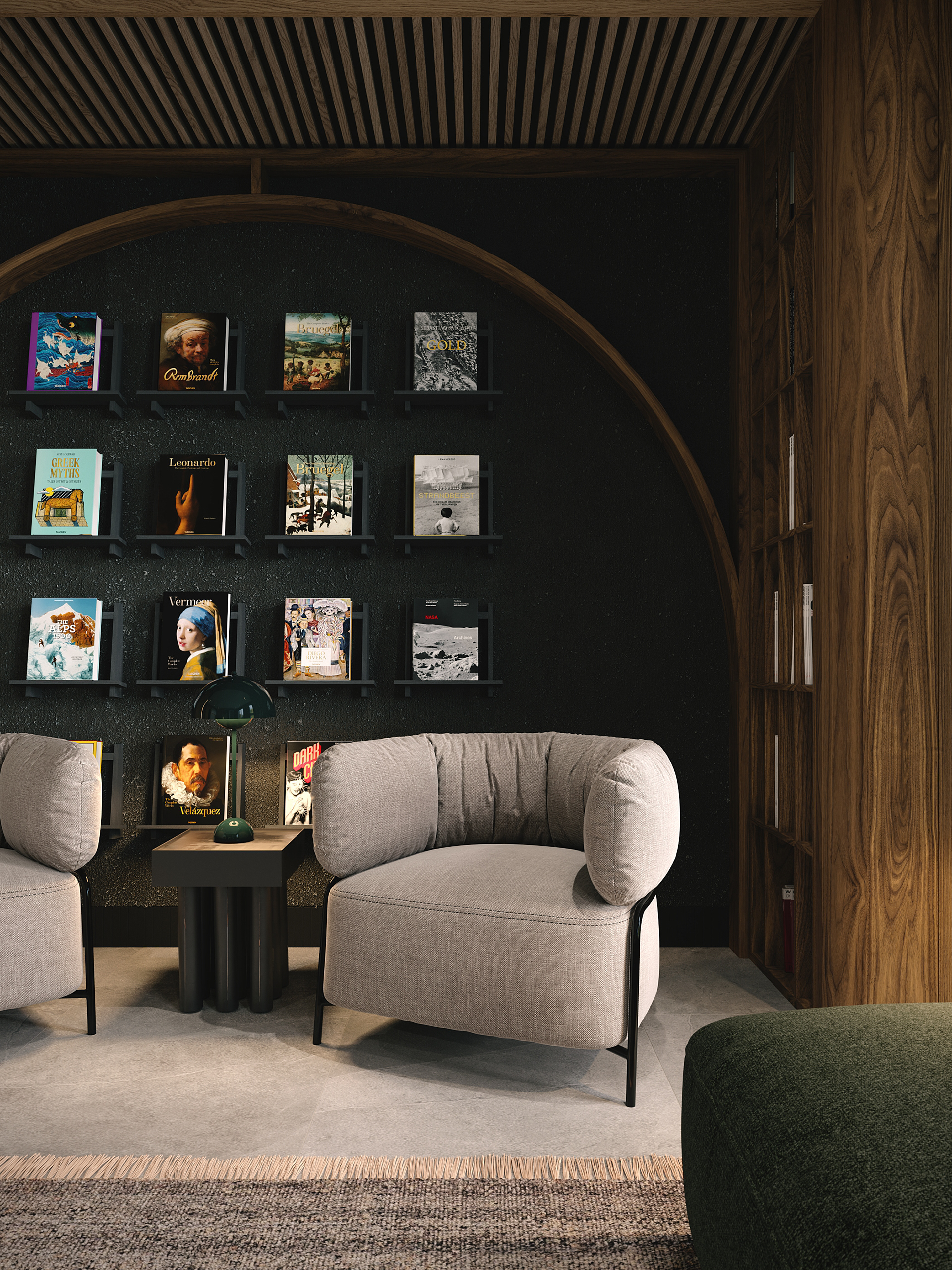
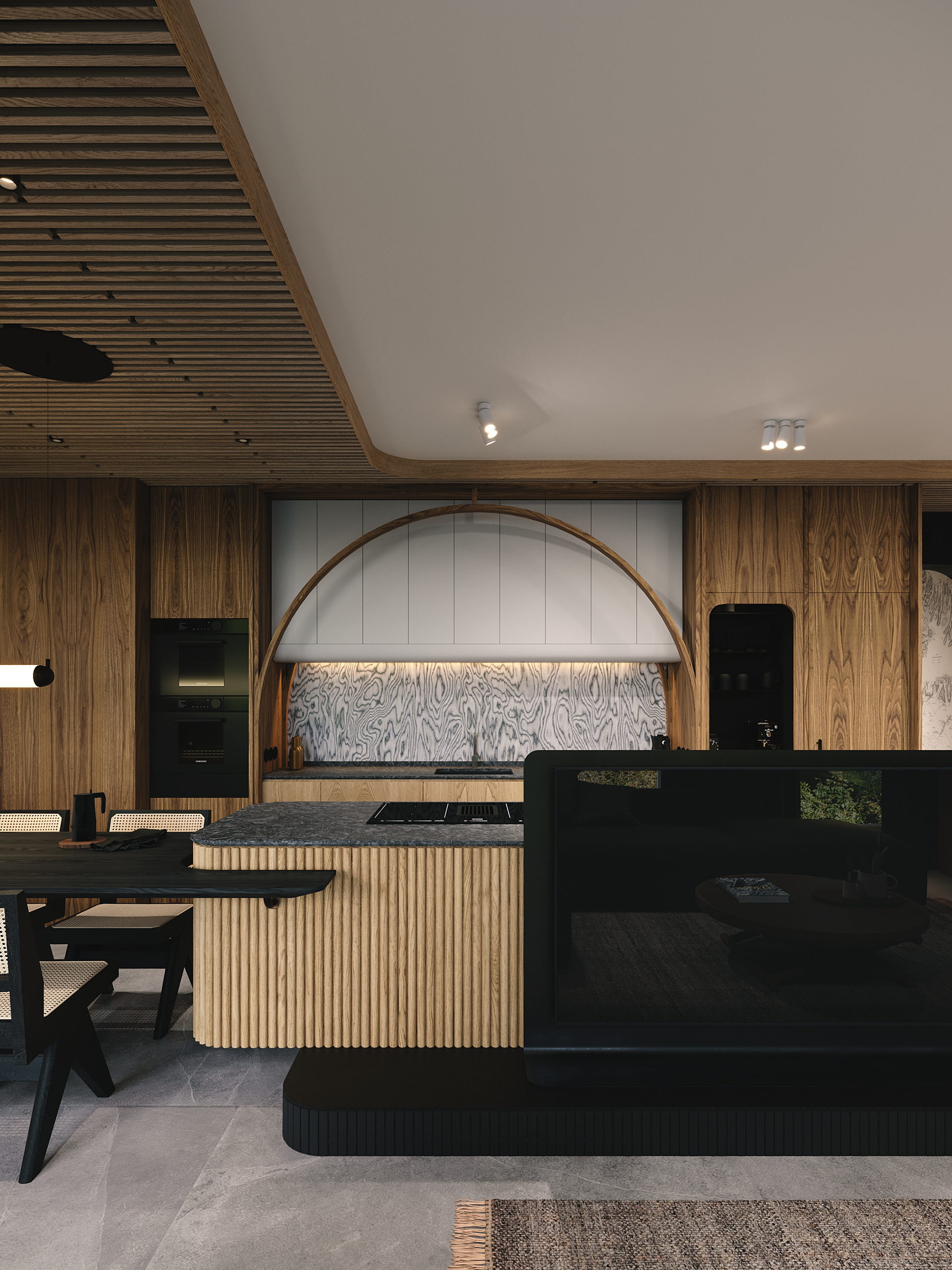
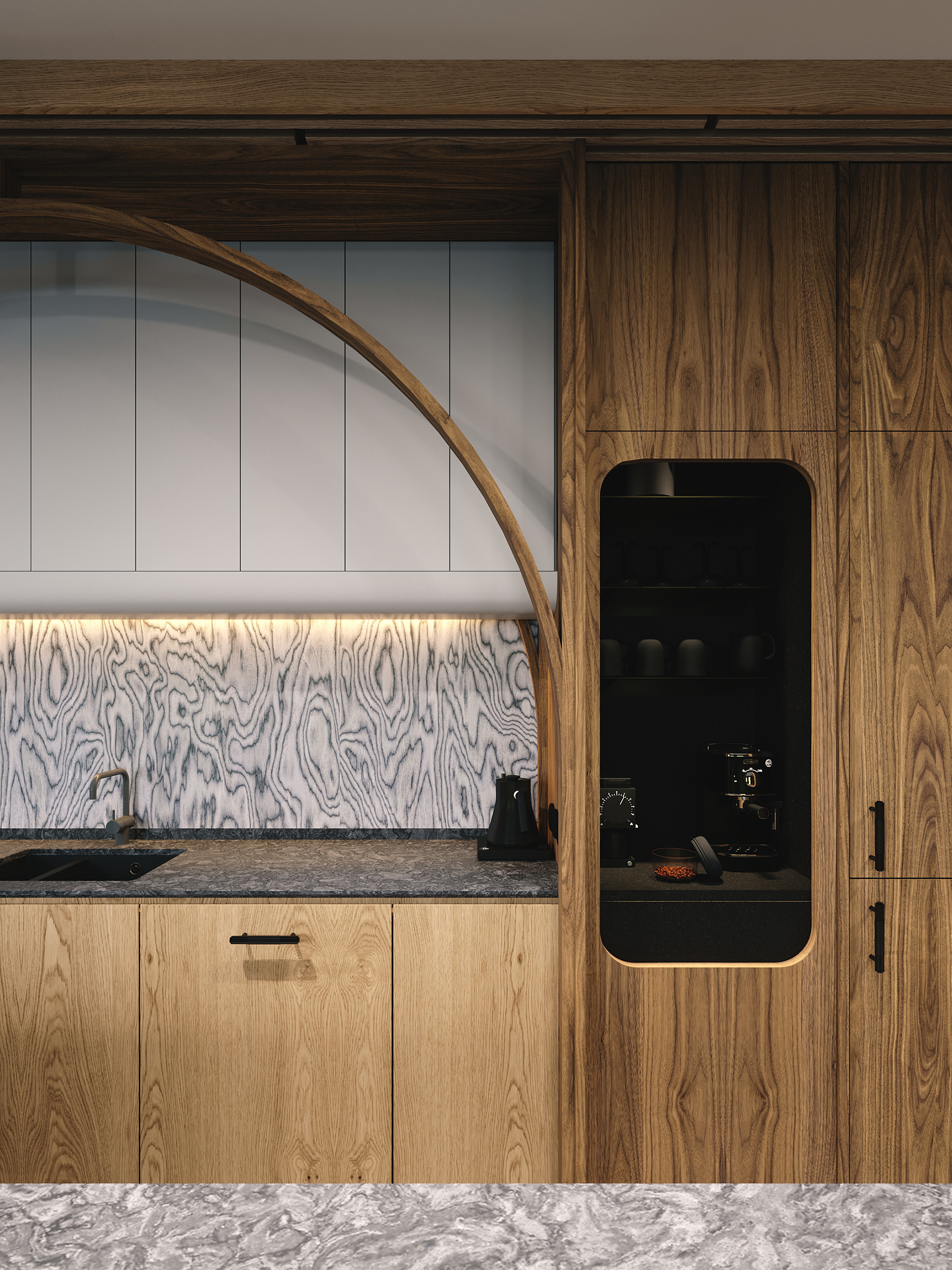
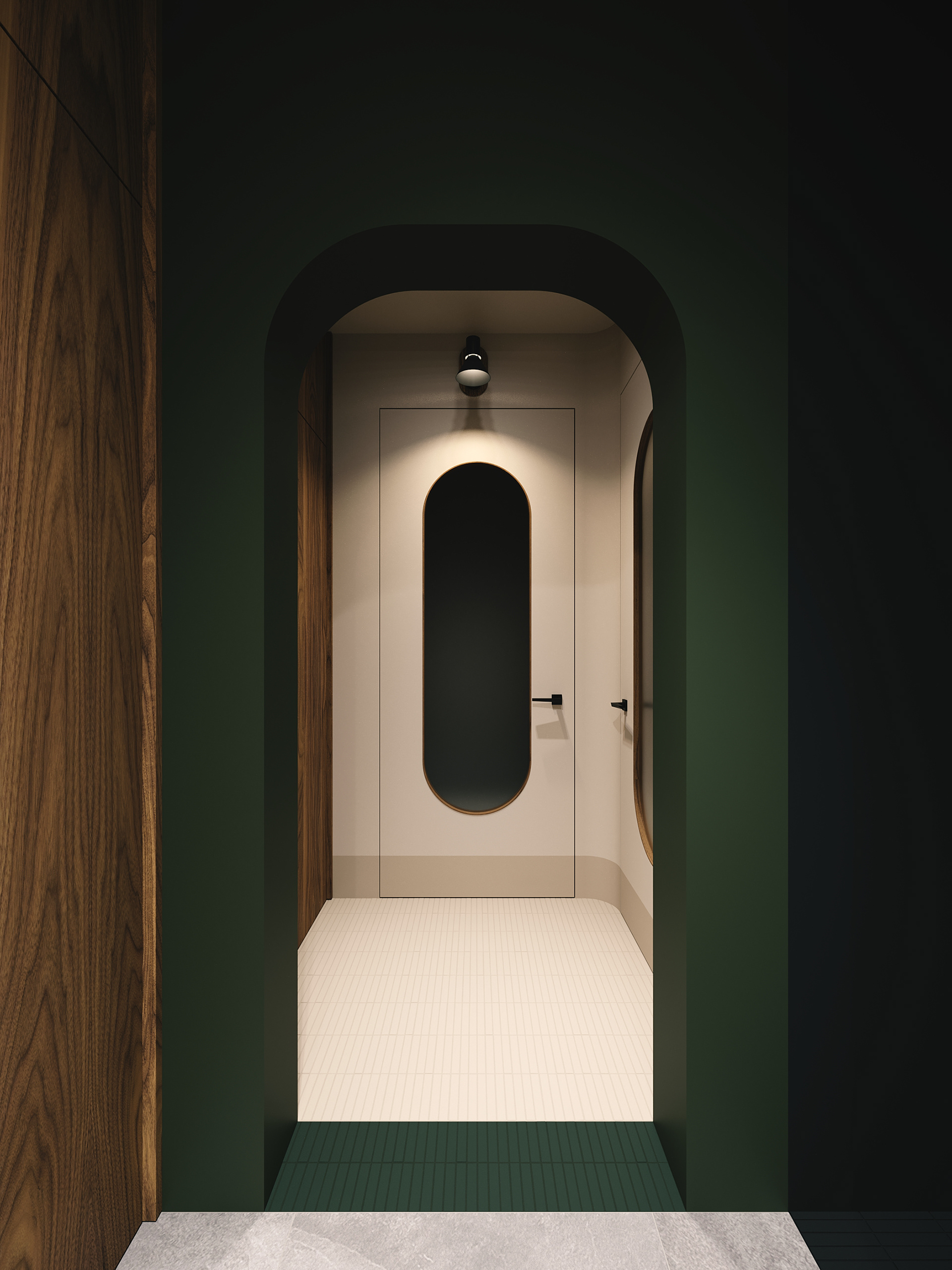
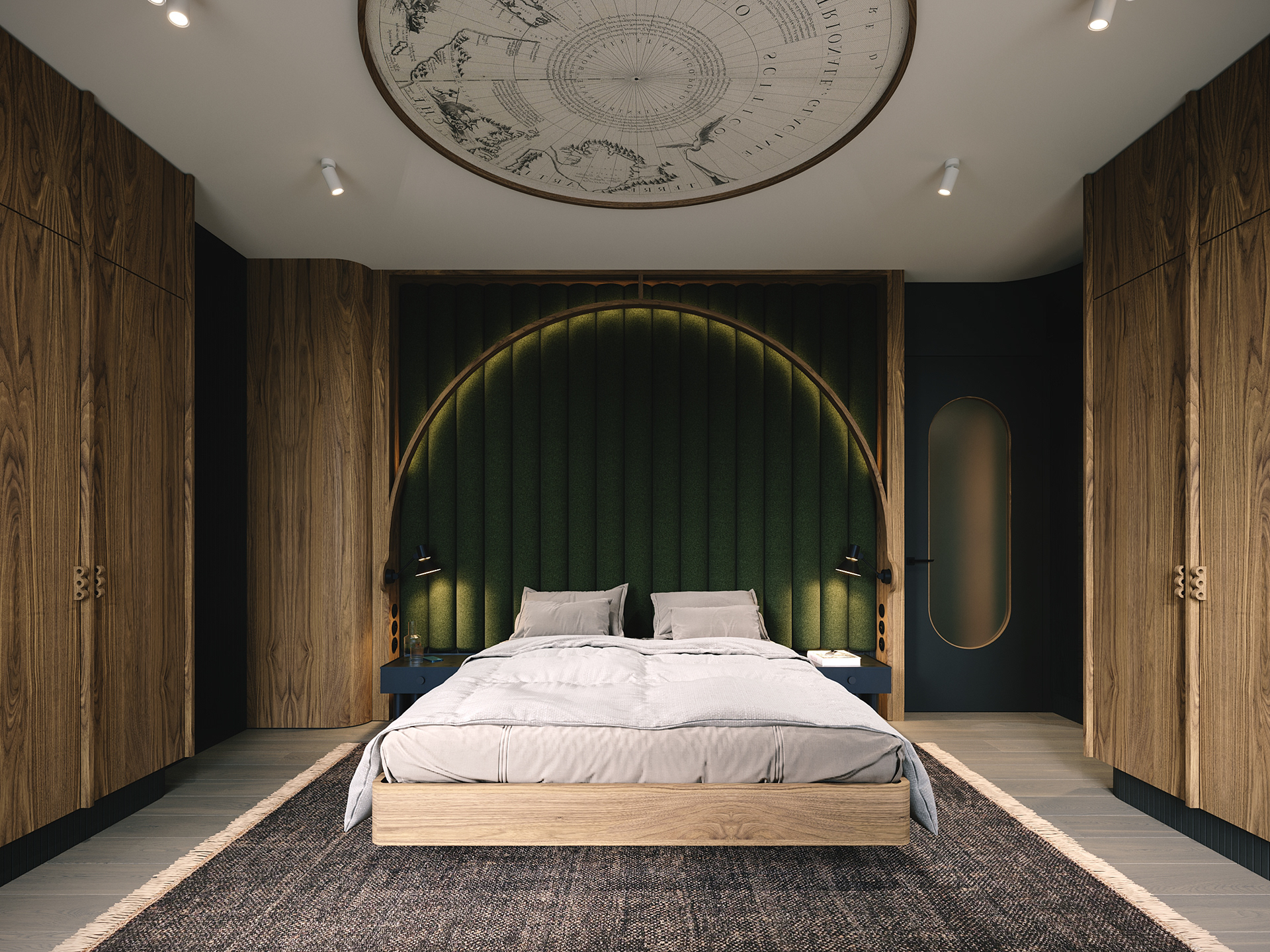
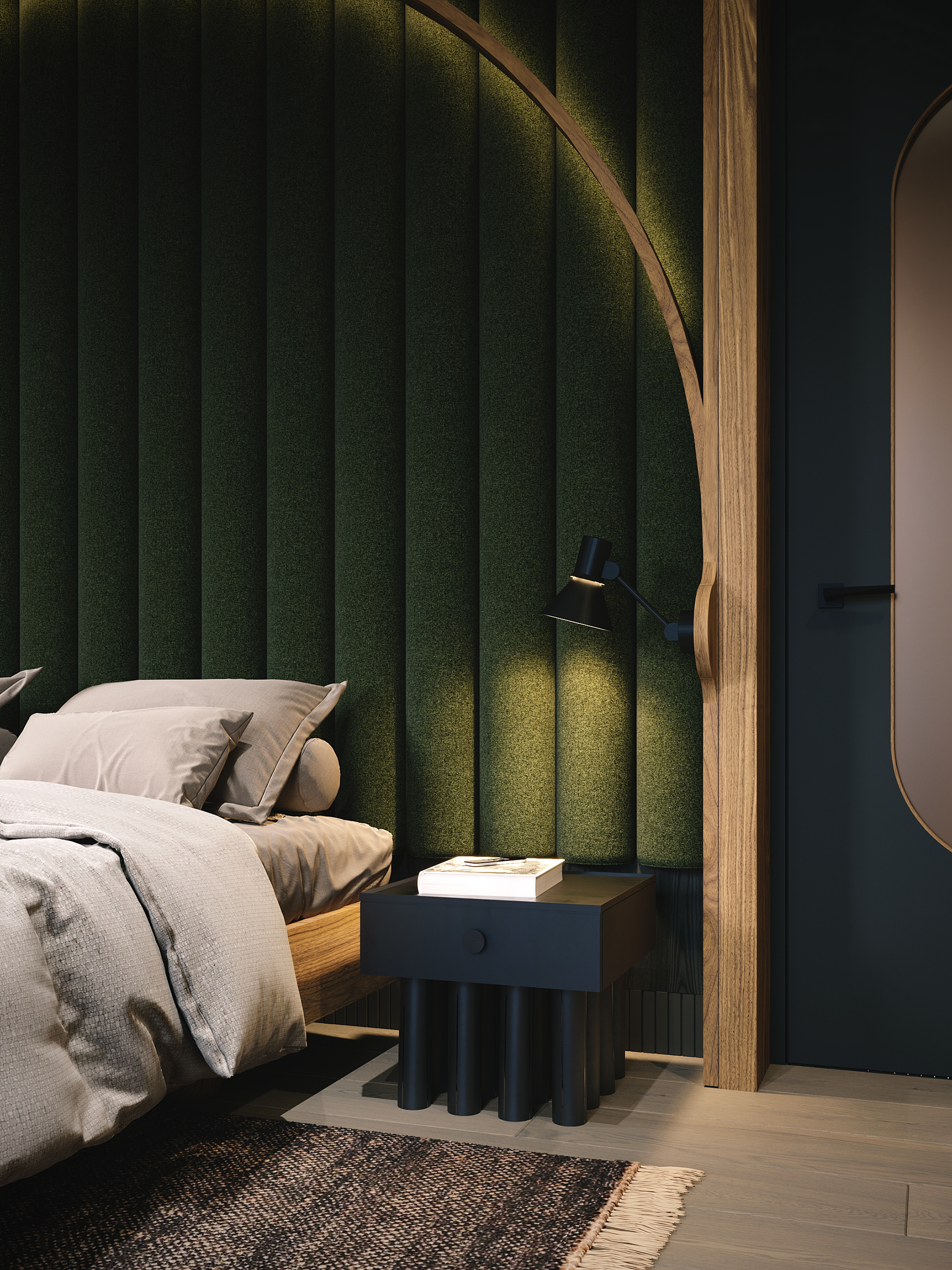
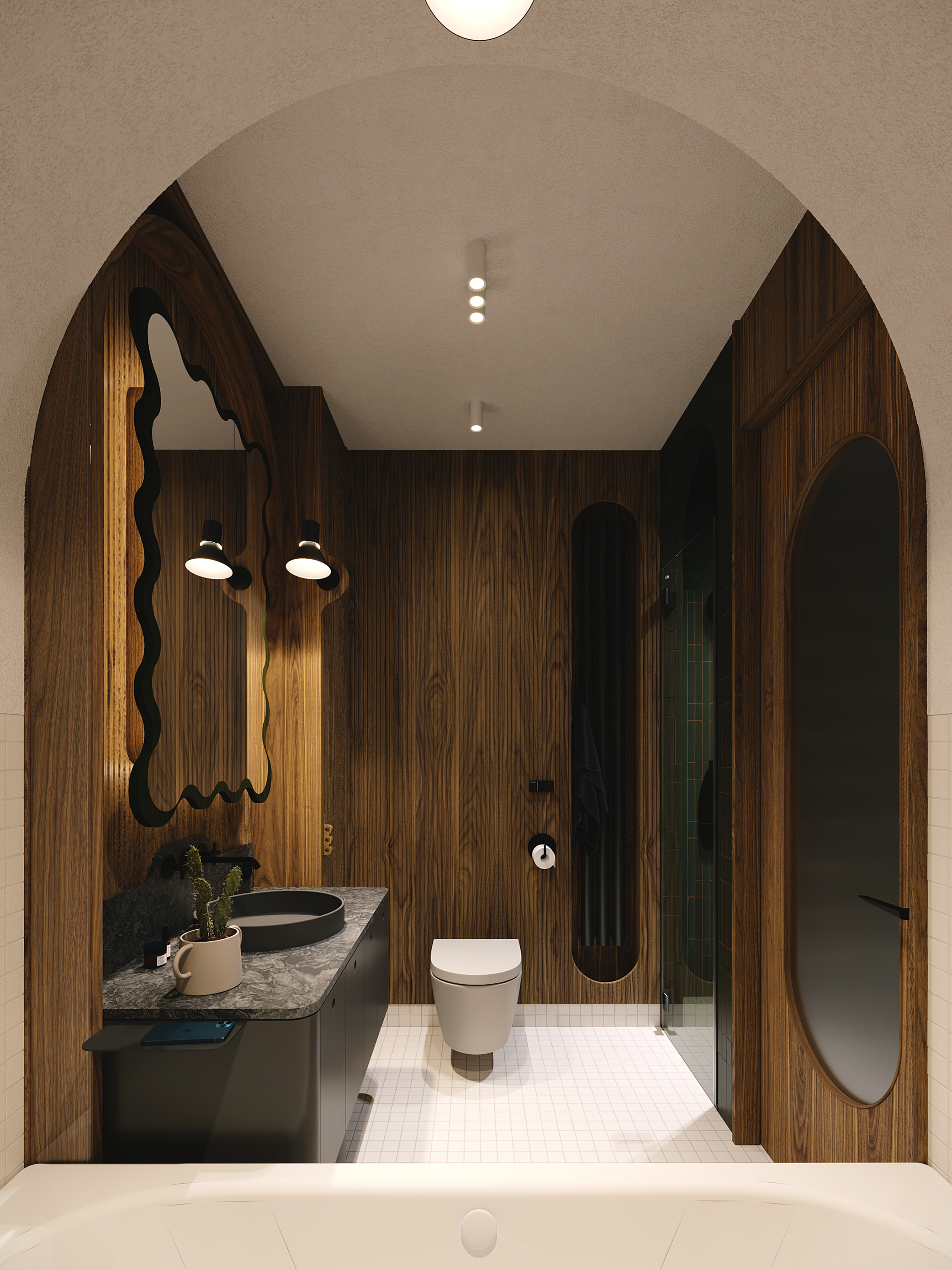
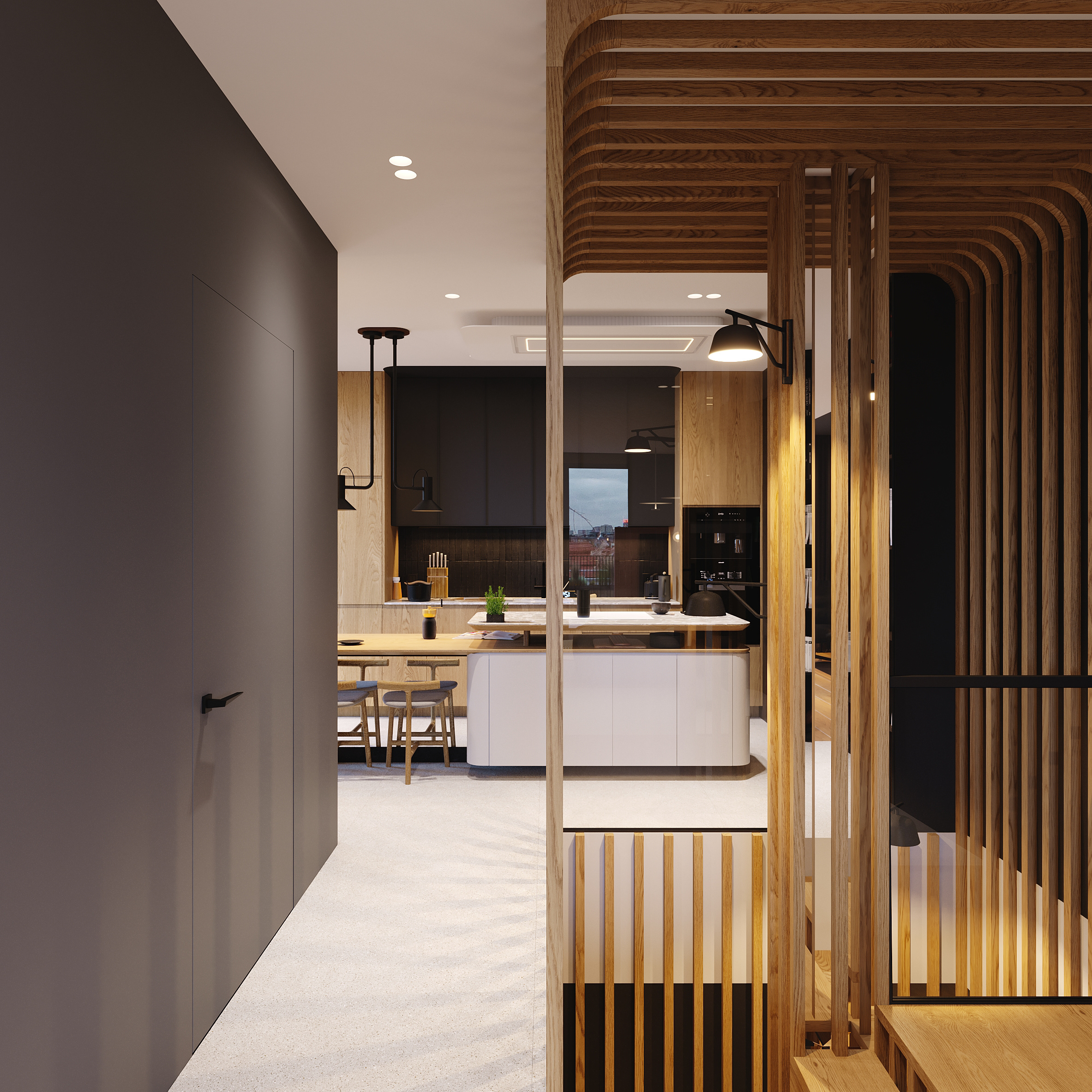
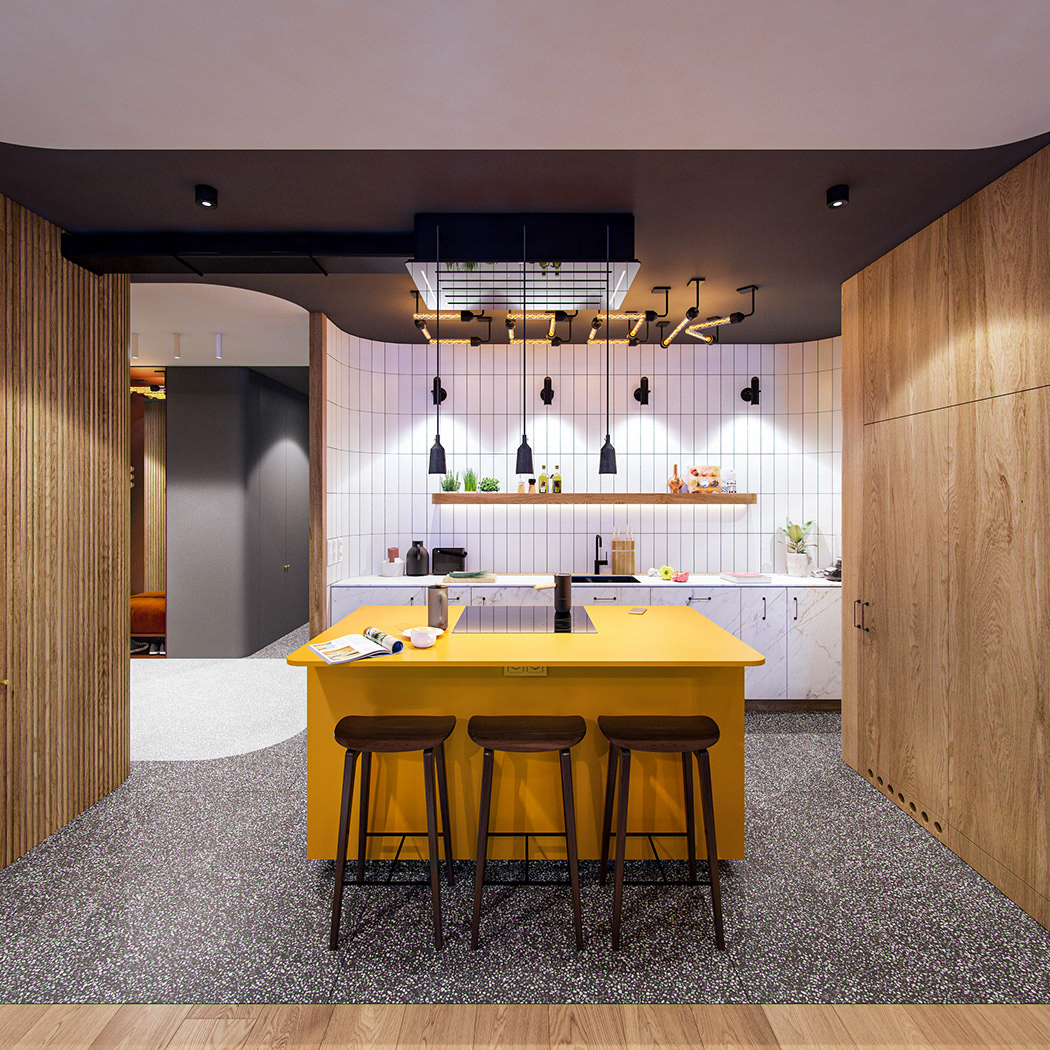
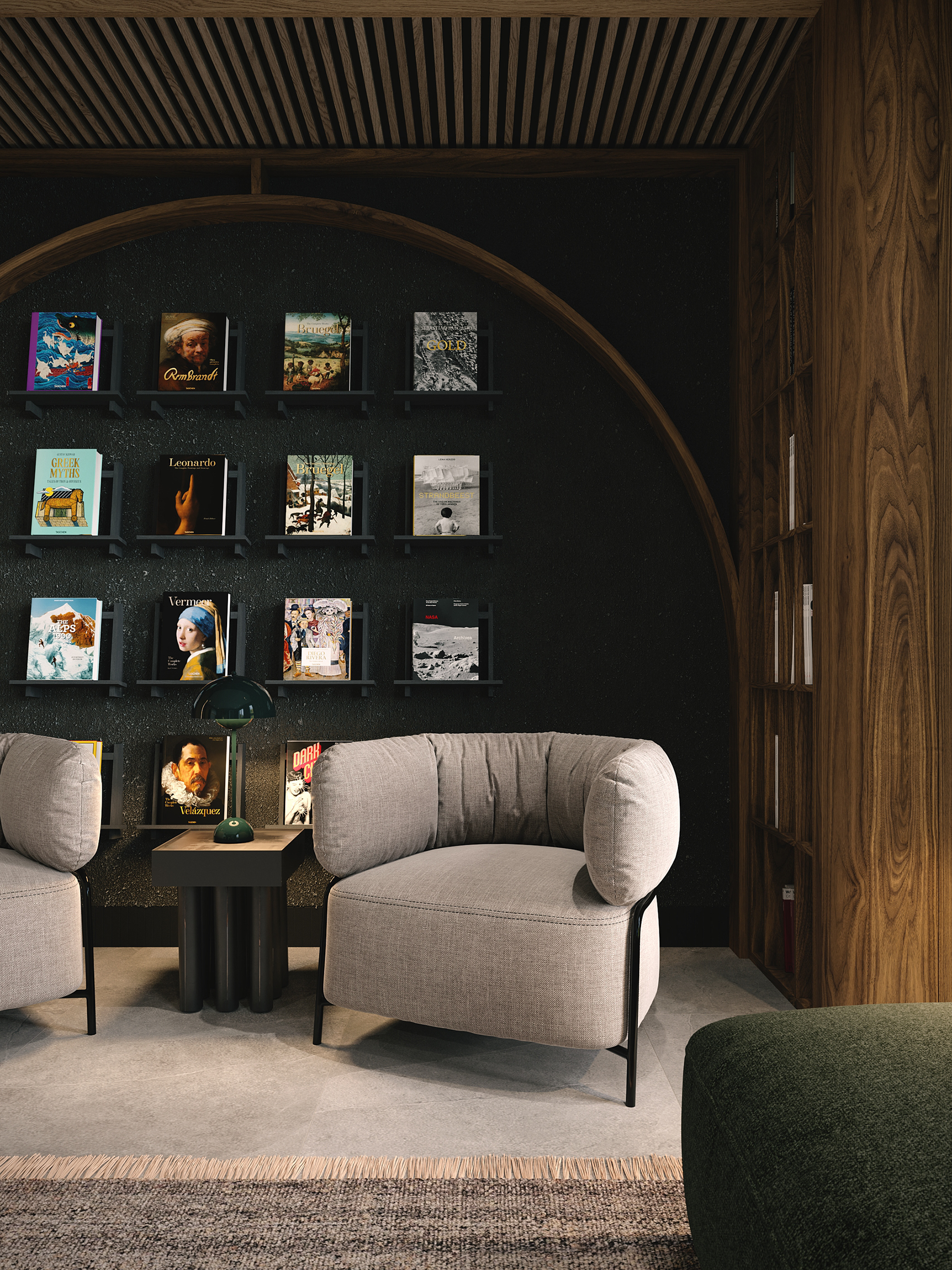
Motyw łuku, konsekwentnie prowadzony w kuchni, łazienkach i sypialni, odwołuje się do architektury okrętów i epoki wielkich wypraw. Te miękkie, wycięte formy porządkują przestrzeń i wprowadzają rytm, jednocześnie kontrastując z ciężarem materiałów. Detal stolarski – precyzyjny, niemal rzemieślniczy – wzmacnia wrażenie solidności i trwałości.
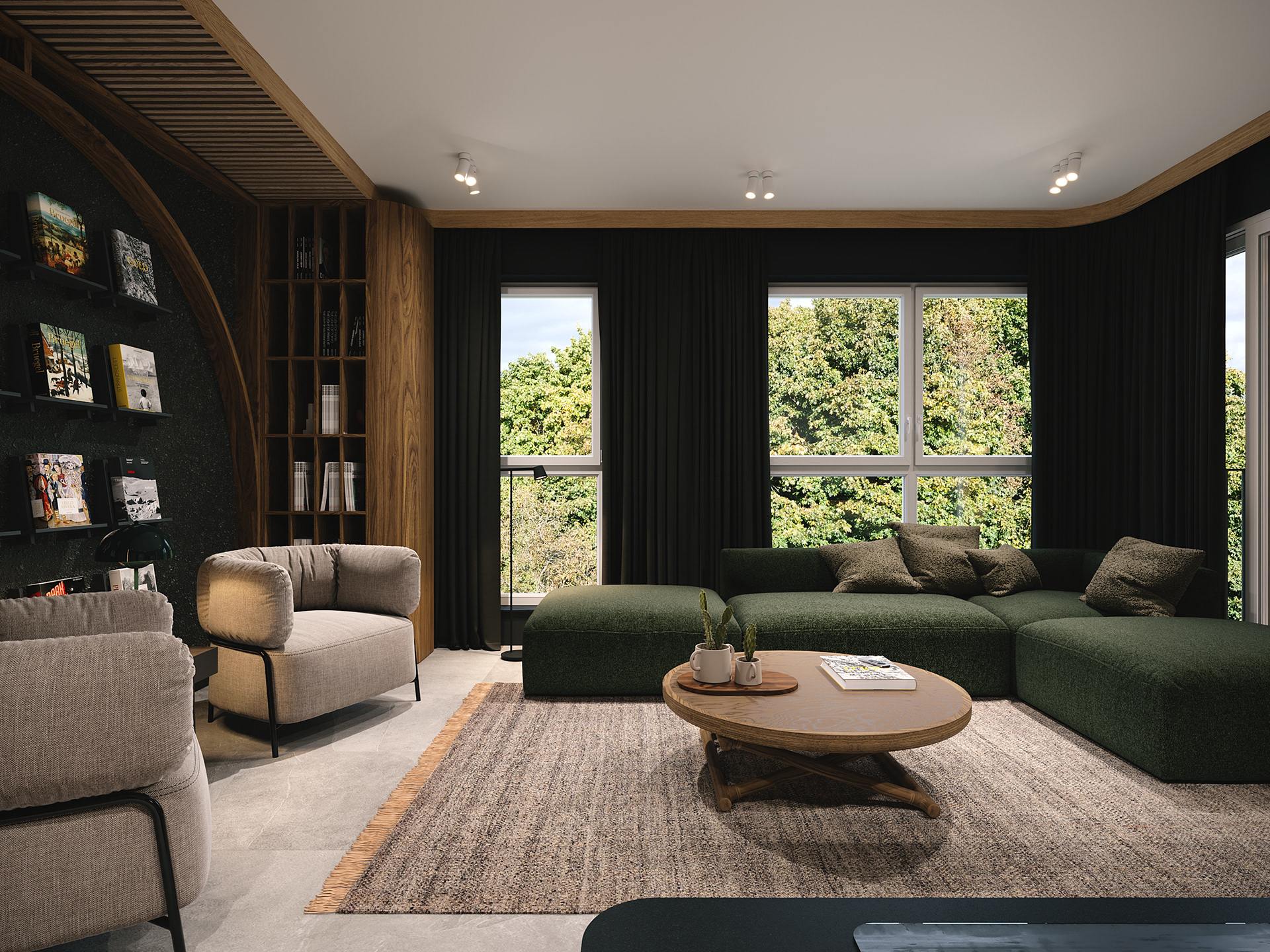
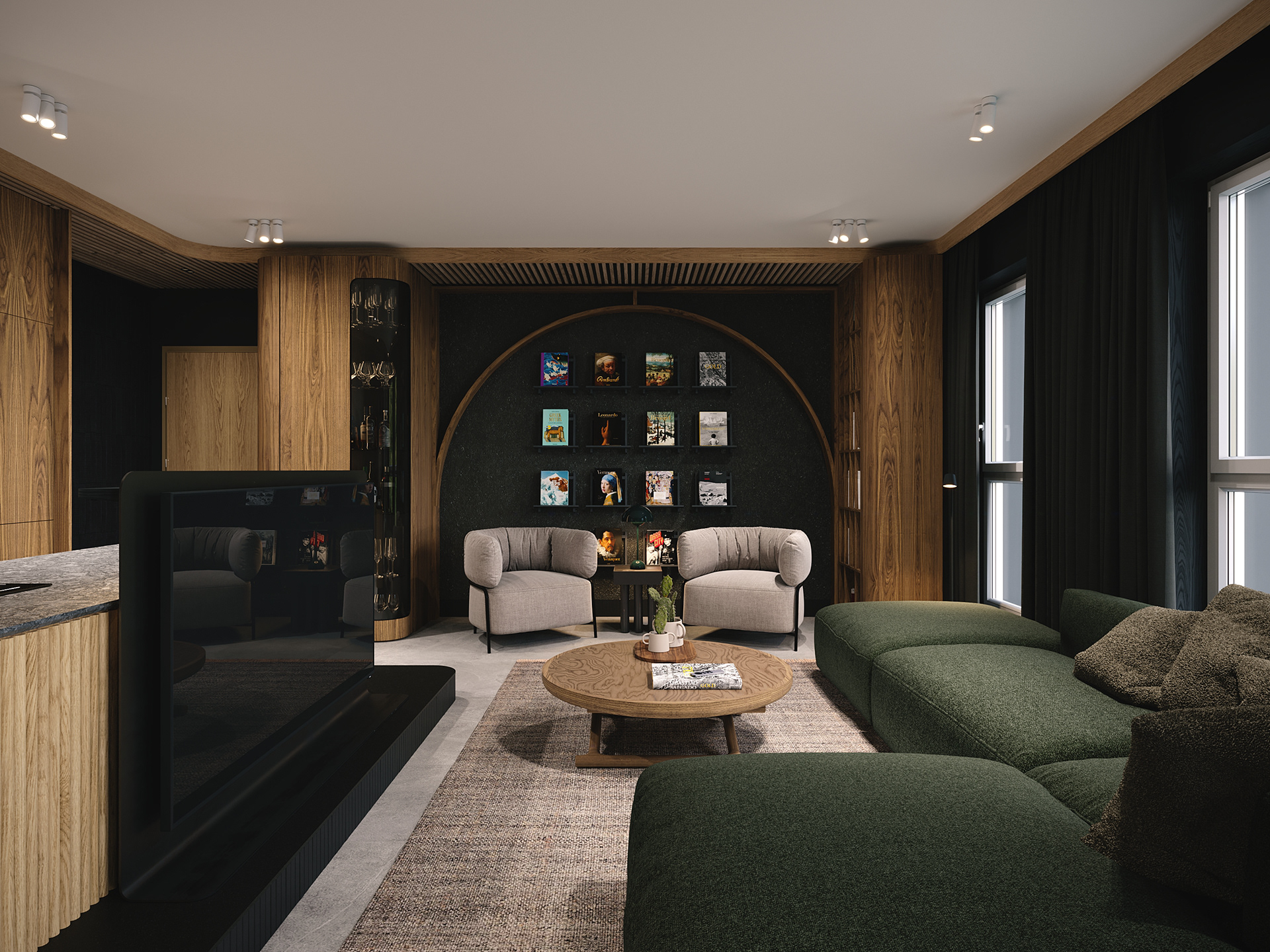
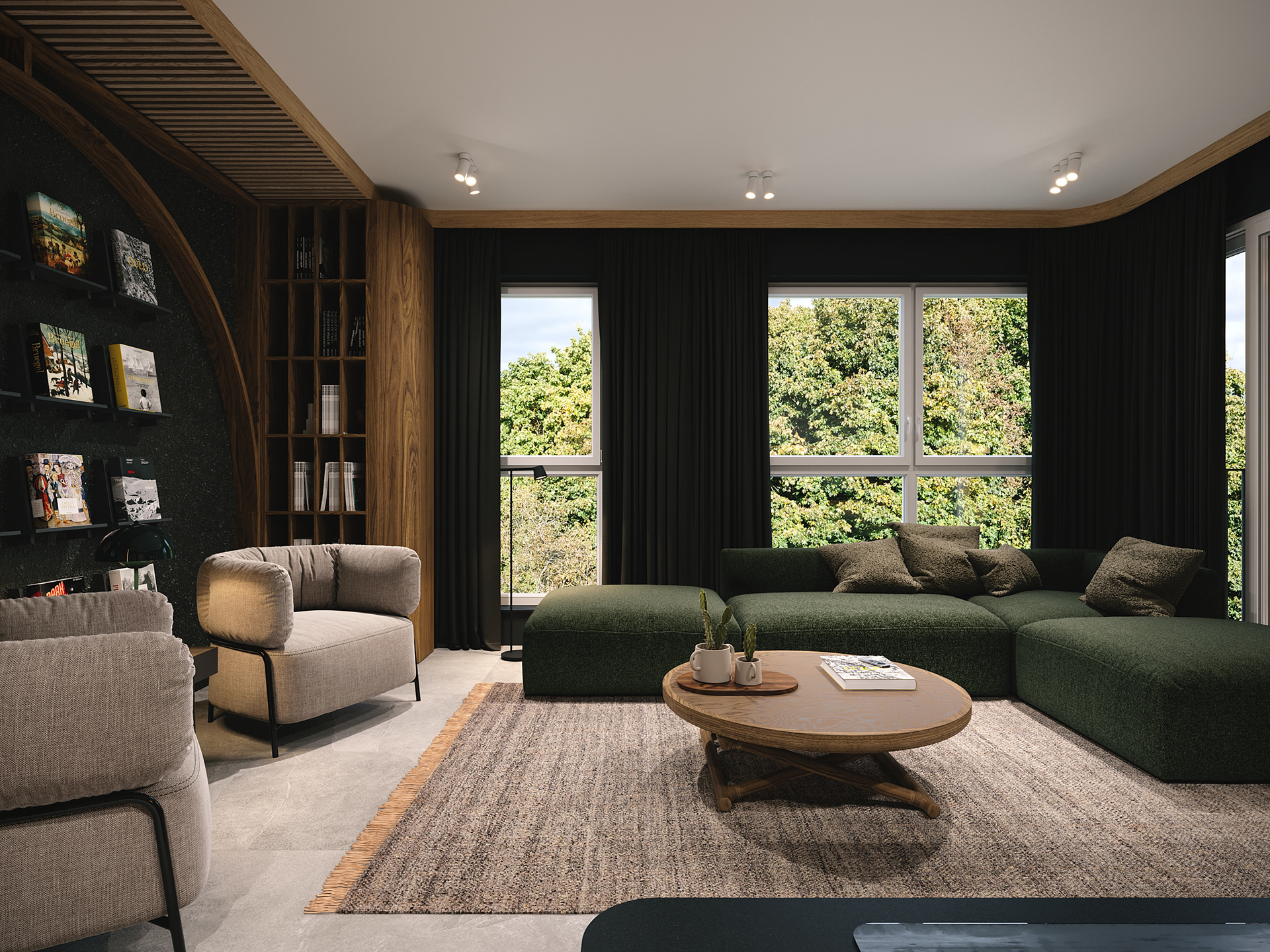
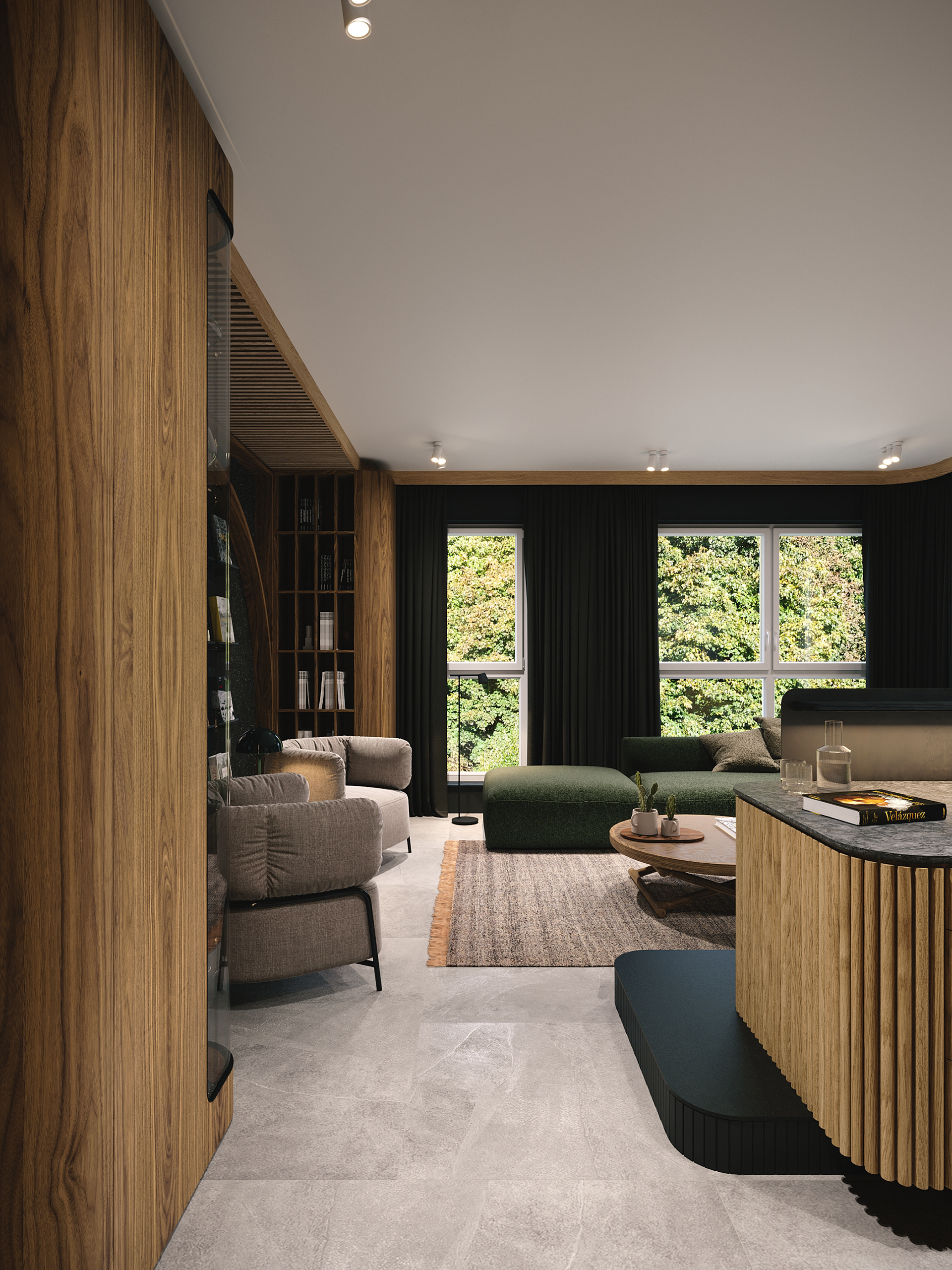
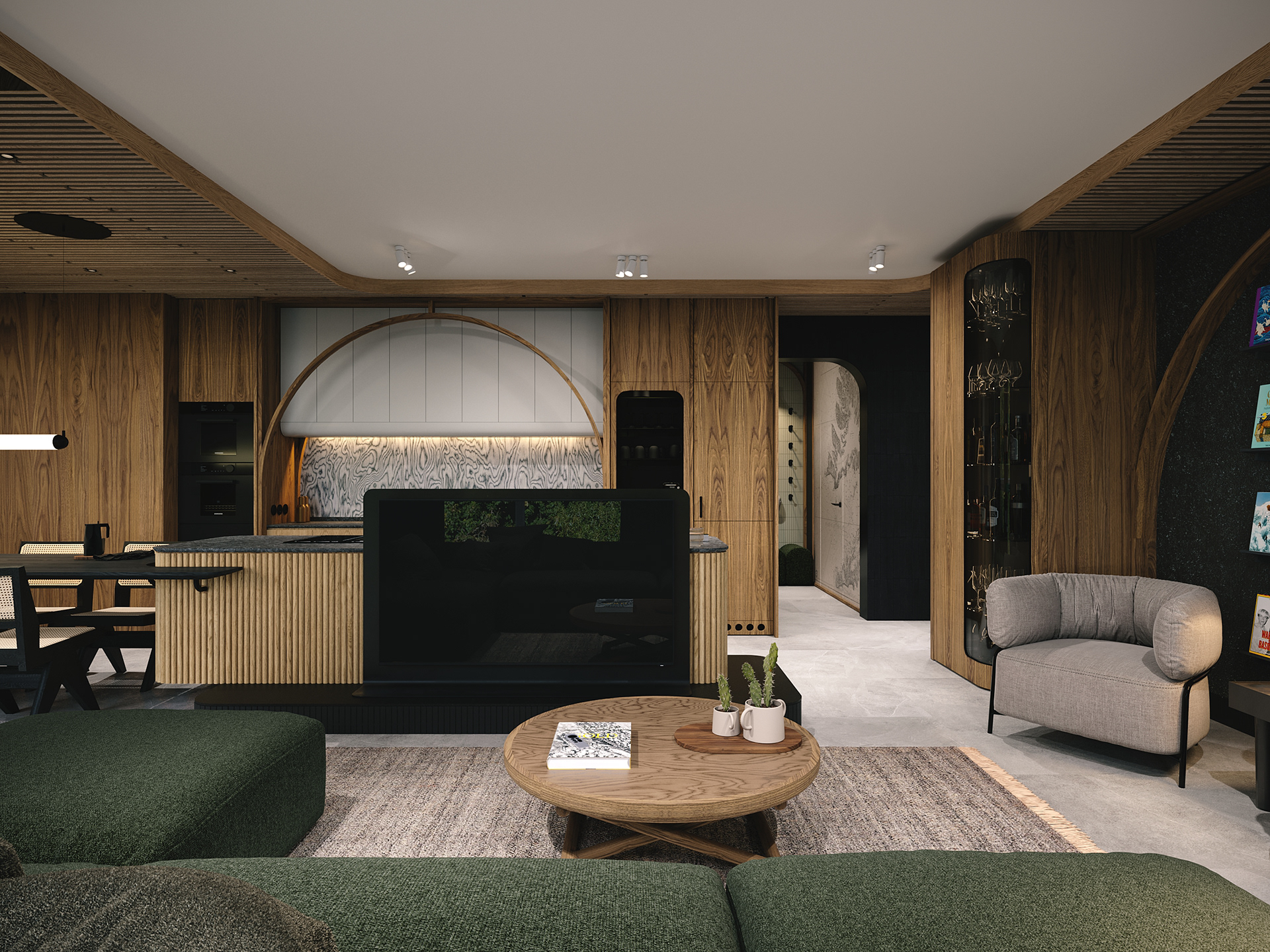
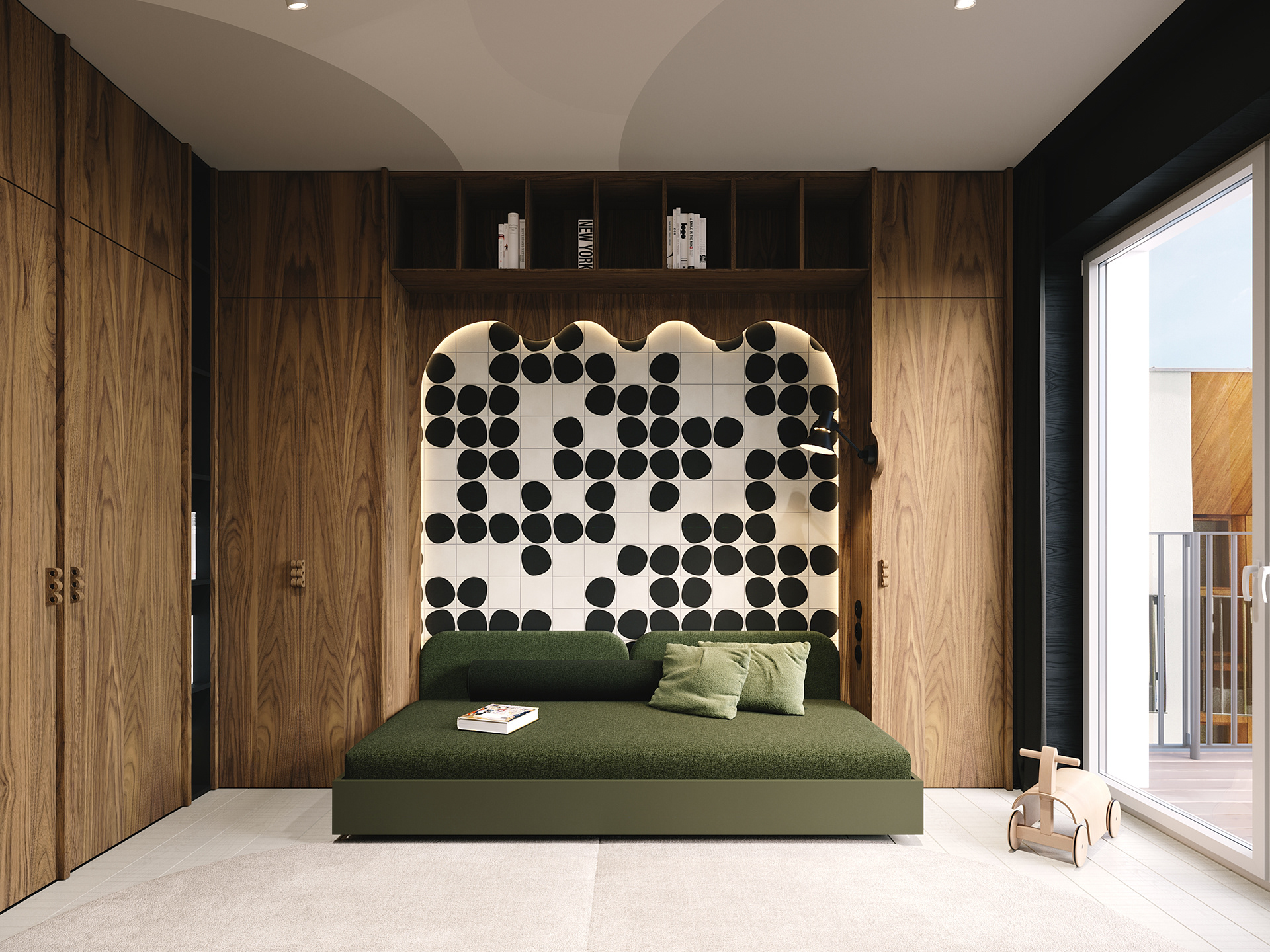
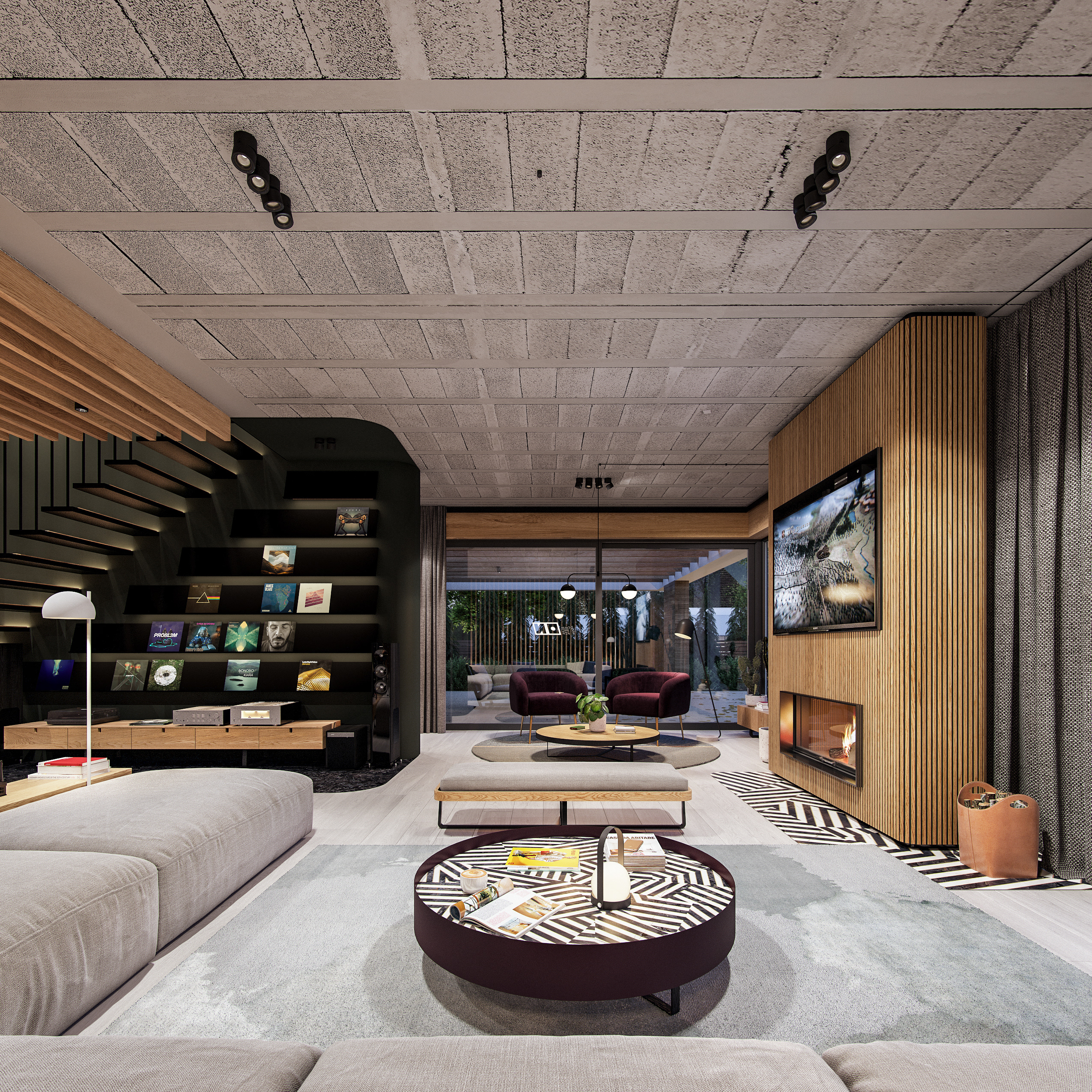
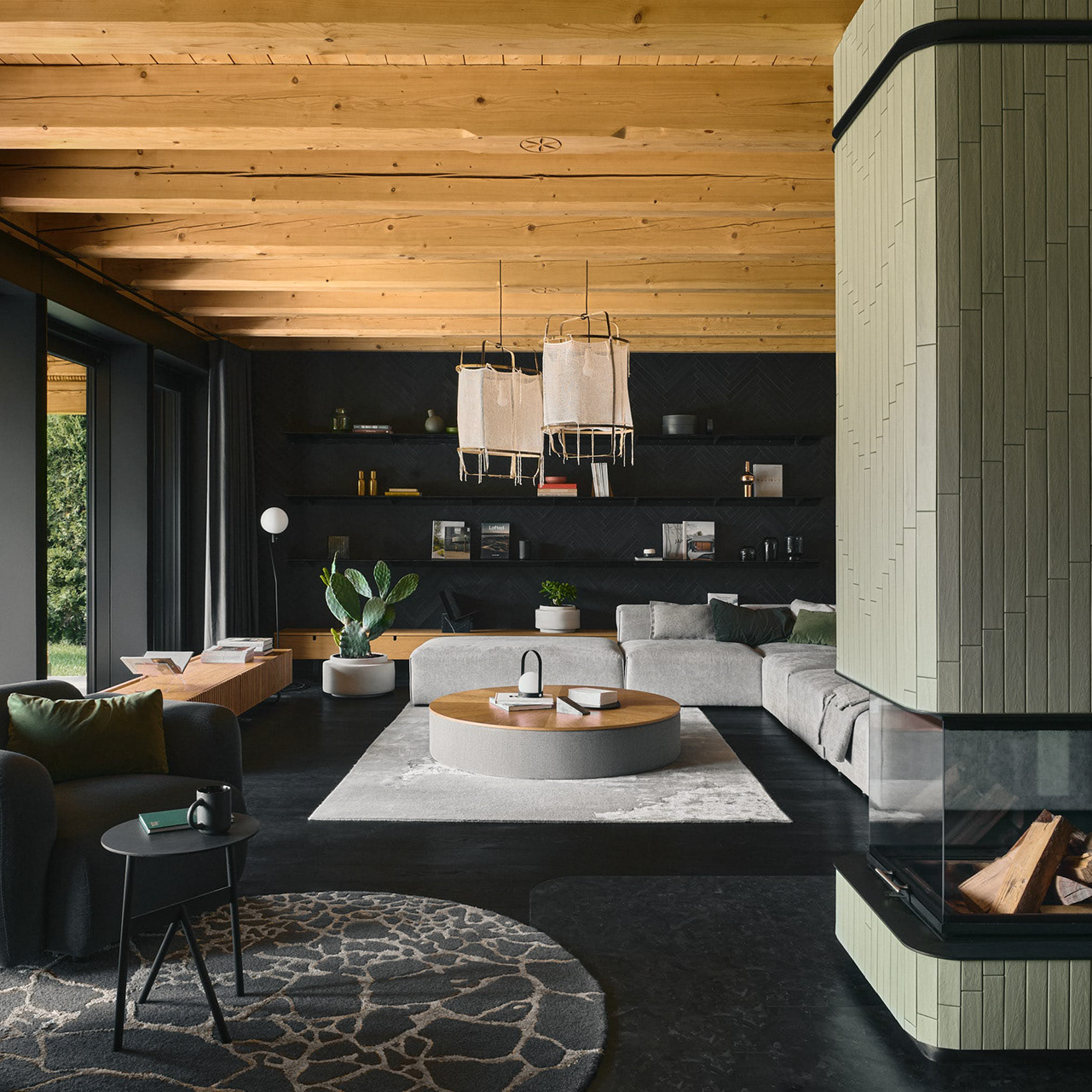
Kompozycję równoważą elementy tapicerowane: niskie, miękkie bryły sof, foteli i zagłówków. Wprowadzają kolor, ale przede wszystkim – dotykową lekkość. Podobną rolę pełnią drobne zaoblenia, rytmy listew, faktury kafli – wszystko pracuje na rzecz zmiękczenia przestrzeni bez utraty jej charakteru.
•
The project builds its identity on a controlled tension between warmth and rawness. The foundation is noble walnut wood with a rich grain—soft in perception, enveloping, almost sensual. It is deliberately contrasted with a more primal materiality: stone surfaces reminiscent of solidified lava, cool floors, and finishes that feel like liquid mineral frozen in motion. This contrast evokes associations with an Icelandic spa—a place where comfort meets the untamed force of nature.
The narrative layer of the interior is rooted in the idea of exploration. Eighteenth-century maps and engravings introduce a sense of travel and discovery, adding intellectual depth and a subtle romantic undertone. They are not mere decoration—they act as a framework for atmosphere, positioning the home as a kind of explorer’s retreat.
The recurring motif of the arch, consistently applied in the kitchen, bathrooms, and bedroom, references the architecture of ships and the era of great voyages. These soft, carved forms organize the space and establish rhythm, while contrasting with the weight of the materials. The joinery detailing—precise, almost artisanal—reinforces a sense of solidity and permanence.
The composition is balanced by upholstered elements: low, soft volumes of sofas, armchairs, and headboards. They introduce color, but more importantly, tactile lightness. A similar role is played by subtle curves, slatted rhythms, and textured tiles—all working together to soften the space without diluting its character.